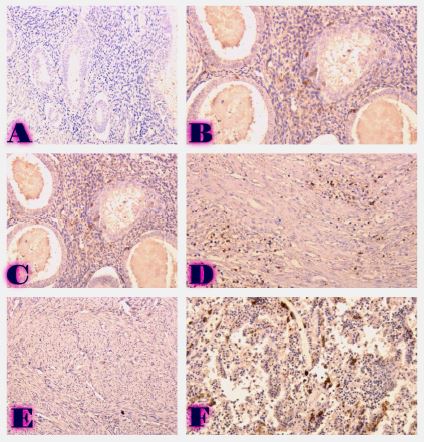
Features of the distribution of acute and chronic inflammatory index in cervical intraepithelial neoplasia of different degrees and its relationship with proliferative activity detected by AgNOR technology
DOI:
https://doi.org/10.52340/gs.2024.06.01.08Keywords:
inflammatory index, AGNOR, Cervical intraepithelial neoplasiaAbstract
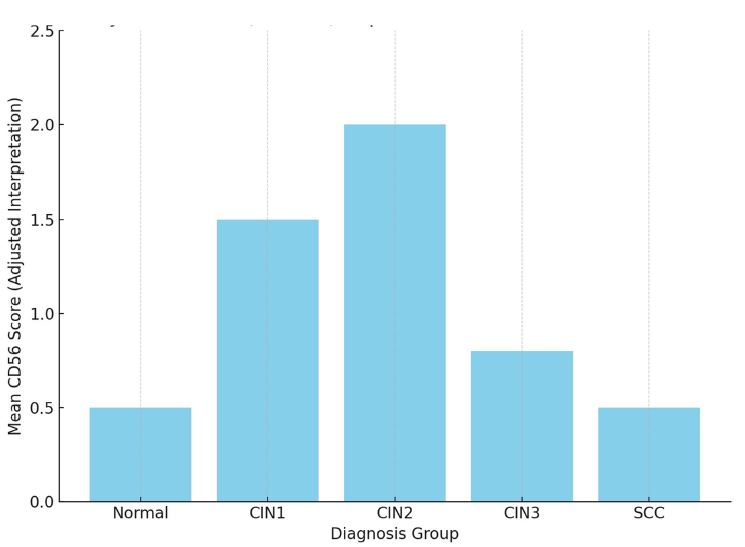
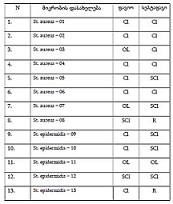
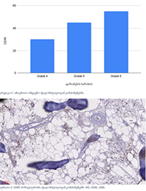
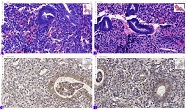
The microflora is the community of microbes that live in different organs. The relationship between the microbiome and inflammation is becoming increasingly clear. Moreover, the role of the microbiome and inflammation in cancer development and progression has been studied in many different studies. When the homeostasis of microorganisms is disturbed, the microorganisms themselves or their products cause counter-immune reactions in the macroorganism. As a result of prolonged inflammation, chronic inflammation develops, which is one of the inducing factors of cancer. Under conditions of chronic inflammation, cells are more prone to malignant transformation. Most studies have focused on the link between cervical cancer and the microbiome, although inflammation may also play a role in the development of cervical cancer. The aim of our study was to study the characteristics of the distribution of acute and chronic inflammatory indices in cervical intraepithelial neoplasia of different grades and to determine its relationship with the proliferative activity detected by AgNOR technology. From the inflammatory index, the higher the degree of dysplasia, the higher the chronic inflammatory index. The chronic inflammatory index can be used as an additional criterion for possible dysplasia. Additional AGNOR staining method may also be used to evaluate proliferative activity.
Downloads
References
Zhou, Z.-W. et al. From Microbiome to Inflammation: The Key Drivers of Cervical Cancer. Front Microbiol 12, (2021).
Castellon, X. & Bogdanova, V. Chronic Inflammatory Diseases and Endothelial Dysfunction. Aging Dis 7, 81 (2016).
Germolec, D. R., Shipkowski, K. A., Frawley, R. P. & Evans, E. Markers of Inflammation. in 57–79 (2018). doi:10.1007/978-1-4939-8549-4_5.
Adak, A. & Khan, M. R. An insight into gut microbiota and its functionalities. Cellular and Molecular Life Sciences 76, 473–493 (2019).
Torcia, M. Interplay among Vaginal Microbiome, Immune Response and Sexually Transmitted Viral Infections. Int J Mol Sci 20, 266 (2019).
Wiik, J. et al. Cervical microbiota in women with cervical intra-epithelial neoplasia, prior to and after local excisional treatment, a Norwegian cohort study. BMC Womens Health 19, 30 (2019).
Norenhag, J. et al. The vaginal microbiota, human papillomavirus and cervical dysplasia: a systematic review and network meta‐analysis. BJOG 127, 171–180 (2020).
Schwabe, R. F. & Jobin, C. The microbiome and cancer. Nat Rev Cancer 13, 800–812 (2013).
So, K. A. et al. Changes of vaginal microbiota during cervical carcinogenesis in women with human papillomavirus infection. PLoS One 15, e0238705 (2020).
FERNANDES, J. V. et al. Link between chronic inflammation and human papillomavirus-induced carcinogenesis (Review). Oncol Lett 9, 1015–1026 (2015).
Arveladze, G., Beriashvili, R., Kepuladze, S. & Burkadze, G. Evaluation of proliferative activity of different subtypes of basal cell carcinomas by AgNOR technology. GEORGIAN SCIENTISTS (2023) doi:10.52340/gs.2023.05.04.19.
Barbakadze, L., Kintraia, N., Burkadze, G. & Kepuladze, S. ASSESSMENT OF PROLIFERATIVE ACTIVITY OF ENDOMETRIAL STROMAL TUMORS USING AgNOR TECHNOLOGY. GEORGIAN SCIENTISTS (2023) doi:10.52340/gs.2023.05.02.16.
Tavdgiridze, N., Tevdorashvili, G., Kepuladze, S. & Burkadze, G. Assessment of proliferative activity of immature ovarian teratomas using AgNOR technology. GEORGIAN SCIENTISTS (2023) doi:10.52340/gs.2023.05.01.20.
Metreveli, B., Gagua, D., Burkadze, G. & Kepuladze, S. Proliferative characteristics of eutopic and ectopic endometrium in adenomyosis using AgNOR technology. GEORGIAN SCIENTISTS (2023) doi:10.52340/gs.2023.05.01.04.
Svanadze, T., Kepuladze, S., Tevzadze, N. & Burkadze, G. ASSESSMENT OF PROLIFERATIVE ACTIVITY OF DIFFERENT TYPES OF SQUAMOUS CELL METAPLASIA OF THE CERVIX USING AgNor TECHNOLOGY. GEORGIAN SCIENTISTS (2023) doi:10.52340/gs.2023.05.02.35.
Turashvili, T., Tevdorashvili, G., Burkadze, G. & Kepuladze, S. Evaluation of proliferative activity of endometrial metaplasias by AgNor technology. GEORGIAN SCIENTISTS (2023) doi:10.52340/2023.05.03.02.
Meshveliani, P., Didava, G., Tomadze, G., Kepuladze, S. & Burkadze, G. Evaluation of proliferative activity of pre-tumor and tumor processes of Barrett’s esophagus using AGNOR technology. GEORGIAN SCIENTISTS (2023) doi:10.52340/gs.2023.05.02.07.
Kveliashvili, T., Didava, G., Kepuladze, S. & Burkadze, G. Peculiarities of the proliferative activity of the gallbladder mucosa in precancerous and cancerous pathologies detected by AgNOR technology. GEORGIAN SCIENTISTS (2023) doi:10.52340/gs.2023.05.04.31.

Downloads
Published
How to Cite
Issue
Section
License
Copyright (c) 2024 Georgian Scientists

This work is licensed under a Creative Commons Attribution-NonCommercial-NoDerivatives 4.0 International License.