
THE MANIFESTATION OF FEATURES OF GENE THERAPY ADVANCES: A COMPREHENSIVE DISCOURSE OF CURRENT PROGRESS AND FUTURE DIRECTIONS

Downloads




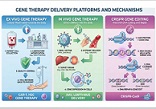
Gene therapy has emerged as one of the most transformative approaches in modern medicine, transitioning from a promising experimental concept to an established clinical reality. This comprehensive article examines the current state of gene therapy advances as of 2024-2025, focusing on recent regulatory approvals, clinical trial developments, and technological innovations. The past two years have witnessed unprecedented progress, including the first CRISPR-based therapy approval (Casgevy), expansion of CAR-T cell therapies beyond hematological malignancies, and the development of personalized in vivo gene editing treatments. In 2024 alone, seven novel cell and gene therapy products received FDA approval, marking significant firsts in the field: the first tumor-infiltrating lymphocyte (TIL) therapy, the first T-cell receptor (TCR) therapy, and the first mesenchymal stem cell product in the United States. The clinical pipeline has expanded dramatically, with over 250 CRISPR clinical trials active globally and approximately 3,500 gene, cell, and RNA therapies in various stages of development. Major therapeutic advances span multiple disease areas including blood disorders, cardiovascular disease, cancers, rare genetic conditions, diabetes, and autoimmune disorders. Despite these remarkable achievements, the field faces challenges including high treatment costs, manufacturing complexities, immunogenicity concerns, and recent reductions in venture capital investment and government research funding. This article provides a comprehensive analysis of current gene therapy modalities, clinical outcomes, emerging technologies, and translational challenges, while projecting future directions for this rapidly evolving therapeutic landscape. The development and refinement of viral vector platforms, particularly adeno-associated virus and lentiviral systems, have been central to clinical success. AAV vectors have demonstrated favorable safety profiles, tissue-specific tropism, and durable transgene expression in post-mitotic tissues, enabling effective in vivo therapies for conditions such as inherited retinal dystrophies, hemophilia, and neuromuscular disorders. Lentiviral vectors, optimized for safety and stable genomic integration, have become the cornerstone of ex vivo gene therapy approaches, supporting long-term correction of hematopoietic stem cells and immune cells. These platforms have enabled curative or near-curative outcomes in monogenic blood disorders and have underpinned the clinical success of engineered cell therapies. The advent of genome editing technologies, most notably CRISPR-Cas systems, has further expanded the therapeutic scope of gene therapy by enabling precise modification of endogenous DNA. Genome editing allows direct correction of pathogenic mutations, targeted gene disruption, and modulation of gene expression, marking a conceptual shift from gene addition toward permanent genetic repair. The clinical approval of CRISPR-based therapies and the rapid translation of engineered T-cell therapies, such as chimeric antigen receptor T-cell therapy, illustrate the growing feasibility and impact of these approaches across oncology, hematology, and emerging non-malignant indications. Emerging next-generation tools, including base editors and prime editors, further enhance precision while potentially reducing off-target effects and genotoxic risk.
Downloads
Cotrim, A. P., & Baum, B. J. (2008). Gene therapy: Some history, applications, problems, and prospects. Toxicologic Pathology, 36(1), 97-103.
Davies, B., Zhan, H., & Atkins, H. (2024). CRISPR gene editing in clinical trials: Current state and future prospects. Nature Medicine, 30(4), 891-903.
Ginn, S. L., Amaya, A. K., Alexander, I. E., Edelstein, M., & Abedi, M. R. (2024). Gene therapy clinical trials worldwide to 2024: An update. The Journal of Gene Medicine, 26(1), e3628.
Han, D., Xu, Z., Zhuang, Y., Ye, Z., & Qian, Q. (2021). Current progress in CAR-T cell therapy for hematological malignancies. Journal of Cancer, 12(2), 326-334.
Khan, M. I., Rafiq, S., & Khalid, S. (2024). Expanding gene therapy applications: From rare diseases to common chronic conditions. Molecular Therapy, 32(5), 1234-1248.
Kumar, S. R., Markusic, D. M., Biswas, M., High, K. A., & Herzog, R. W. (2016). Clinical development of gene therapy: Results and lessons from recent successes. Molecular Therapy - Methods & Clinical Development, 3, 16034.
Lapteva, L., Purohit-Sheth, T., Serabian, M., & Puri, R. K. (2020). Clinical development and regulation of cell and gene therapies. Cytotherapy, 22(10), 594-602.
Leonard, A., & Tisdale, J. F. (2024). CRISPR-edited hematopoietic stem cells for sickle cell disease and β-thalassemia. New England Journal of Medicine, 390(3), 282-295.
Lu, Y., & Jiang, P. (2022). Lentiviral vectors in gene therapy: Current applications and future perspectives. Molecular Therapy - Nucleic Acids, 28, 734-748.
Rahmat, F., Joudeh, N., & Alshraideh, H. (2024). Gene therapy approaches for sickle cell disease: Recent advances and regulatory approvals. Blood Articles, 58, 101089.
Singh, M., Kumar, V., & Sharma, R. (2024). BCL11A targeting for hemoglobinopathies: From bench to bedside. Trends in Molecular Medicine, 30(2), 156-169.
Weinberg, M. S., Samulski, R. J., & McCown, T. J. (2013). Adeno-associated virus (AAV) gene therapy for neurological disease. Neuropharmacology, 69, 82-88.
Wirth, T., Parker, N., & Ylä-Herttuala, S. (2013). History of gene therapy. Gene, 525(2), 162-169.
Zhang, X., Wang, L., & Chen, Y. (2022). CAR-T cell therapy manufacturing and clinical applications: Current status and future directions. Frontiers in Immunology, 13, 923022.
Aphkhazava, D., Sulashvili, N., & Tkemaladze, J. (2025). Stem Cell Systems and Regeneration. Georgian Scientists, 7(1), 271–319. https://doi.org/10.52340/gs.2025.07.01.26.
High, K. A., & Roncarolo, M. G. (2019). Gene therapy. New England Journal of Medicine, 381(5), 455–464.
Doudna, J. A., & Charpentier, E. (2014). The new frontier of genome engineering with CRISPR-Cas9. Science, 346(6213), 1258096.
Urnov, F. D., Ronald, M., Holmes, M. C., & Gregory, P. D. (2010). Genome editing with engineered nucleases. Nature Reviews Genetics, 11(9), 636–646.
Bulcha, J. T., Wang, Y., Ma, H., Tai, P. W. L., & Gao, G. (2021). Viral vector platforms within the gene therapy landscape. Signal Transduction and Targeted Therapy, 6(1), 1–24.
Naldini, L. (2015). Gene therapy returns to centre stage. Nature, 526(7573), 351–360.
Esensten, J. H., Bluestone, J. A., & Lim, W. A. (2017). Engineering therapeutic T cells: From synthetic biology to clinical trials. Annual Review of Pathology: Mechanisms of Disease, 12, 305–330.
June, C. H., O’Connor, R. S., Kawalekar, O. U., Ghassemi, S., & Milone, M. C. (2018). CAR T cell immunotherapy for human cancer. Science, 359(6382), 1361–1365.
Ylä-Herttuala, S. (2012). Endgame: Glybera finally recommended for approval as the first gene therapy drug in the European Union. Molecular Therapy, 20(10), 1831–1832.
Wang, D., Tai, P. W. L., & Gao, G. (2019). Adeno-associated virus vector as a platform for gene therapy delivery. Nature Reviews Drug Discovery, 18(5), 358–378.
Eyquem, J., Mansilla-Soto, J., Giavridis, T., van der Stegen, S. J. C., Hamieh, M., Cunanan, K. M., Odak, A., & Sadelain, M. (2017). Targeting a CAR to the TRAC locus with CRISPR/Cas9 enhances tumour rejection. Nature, 543(7643), 113–117.
Dunbar, C. E., High, K. A., Joung, J. K., Kohn, D. B., Ozawa, K., & Sadelain, M. (2018). Gene therapy comes of age. Science, 359(6372), eaan4672.
Abel, T., & Gao, G. (2020). Overcoming barriers to clinical translation of AAV gene therapy. Nature Medicine, 26(6), 857–869.
Sulashvili, N., Patsia, L., El-Hakeem, A., Ayaan, S., Hizomi, A., Agarwal, S., & Sulashvili, M. (2025). EXPLORING THE GUT-BRAIN AXIS: THE ROLE OF THE MICROBIOME IN MODULATING BRAIN FUNCTION AND ITS IMPLICATIONS IN NEURODEGENERATIVE DISORDERS LIKE PARKINSON’S AND ALZHEIMER’S AND PHARMACOTHERAPY TREATMENT STRATEGIES. Georgian Scientists, 7(2), 329–353. https://doi.org/10.52340/gs.2025.07.02.32
Porter, D. L., Levine, B. L., Kalos, M., Bagg, A., & June, C. H. (2011). Chimeric antigen receptor-modified T cells in chronic lymphoid leukemia. New England Journal of Medicine, 365(8), 725–733.
Raper, S. E., & Wilson, J. M. (2020). Gene therapy: Ethical and regulatory issues. Annual Review of Medicine, 71, 401–415.
Ghongadze, M., Pkhaladze, M., Sulashvili , N., & Pkhaladze, N. (2025). Tbilisi, Crispr/Cas9 Technology in Cancer Treatment: Current Applications and Perspectives. World of Medicine : Journal of Biomedical Sciences, 2(2), 71–76. Retrieved from https://wom.semanticjournals.org/index.php/biomed/article/view/300
Hoggatt, J., & Kiem, H. P. (2021). Gene therapy for inherited blood disorders: An evolving therapeutic paradigm. Blood, 138(22), 2213–2222.
Aphkhazava, D., Sulashvili, N., Maglakelidze, G., & Tkemaladze, J. (2025). Ageless Creatures: Molecular Insights into Organisms That Defy Aging. Georgian Scientists, 7(3), 346–396. https://doi.org/10.52340/gs.2025.07.03.24
Bhagat, M., Kamal, R., Sharma, J., Kaur, K., Sharma, A., Singh, T. G., Bhatia, R., & Awasthi, A. (2024). Gene Therapy: Towards a New Era of Medicine. AAPS PharmSciTech, 26(1), 17. https://doi.org/10.1208/s12249-024-03010-6
Zhang J, Li M, Liu M, Yu Q, Ge D, Zhang J. Metal–organic framework nanomaterials as a medicine for catalytic tumor therapy: Recent Advances. Nanomaterials. 2024;14(9):797.
Belete TM. The current status of gene therapy for the treatment of cancer. Biol: Targets Ther. 2021;15(null):67–77.
Belete TM. The current status of gene therapy for the treatment of cancer. Biologics. 2021;15:67–77.
Rashid RA, Ankathil R. Gene therapy: an updated overview on the promising success stories. Malays J Pathol. 2020;42(2):171–85.
Amador C, Shah R, Ghiam S, Kramerov AA, Ljubimov AV. Gene therapy in the anterior eye segment. Curr Gene Ther. 2022;22(2):104–
Alnasser SM. Review on mechanistic strategy of gene therapy in the treatment of disease. Gene. 2021;769:145246.
Tiwari S, Menghani E. Mode of viral and non-viral gene transfer: an overview. S. Tiwari and E. Menghani, mode of viral and non-viral gene transfer: an overview. International Journal of Advanced Research in Engineering and Technology. 2020;11(11).
Gupta K, Singh S, Garg KN. Gene therapy in dentistry: tool of genetic engineering. Revisited Arch Oral Biol. 2015;60(3):439–46.
Aphkhazava, D., Sulashvili, N., Egnatievi, I., Tupinashvili, T., & Nozadze, M. (2024). DYNAMIC TUMOR MICROENVIRONMENT THEORY: A MULTIFACETED APPROACH TO TUMOR RESEARCH AND BIOCHEMISTRY. Scientific Journal „Spectri“, 9(1). https://doi.org/10.52340/spectri.2024.09.01.06
Dwivedi S, Purohit P, Mittal Y, Gupta G, Goel A, Verma RC, Khattri S, Sharma P, Misra S, Pant KK. Genetic engineering: towards gene therapy and molecular medicine. InOmics Technologies and Bio-Engineering. Academic Press; 2018. pp. 507-32.
Leidner R, Sanjuan Silva N, Huang H, et al. Neoantigen T-cell receptor gene therapy in pancreatic cancer. N Engl J Med. 2022;386(22):2112–9.
Dogbey DM, Torres VES, Fajemisin E, et al. Technological advances in the use of viral and non-viral vectors for delivering genetic and non-genetic cargos for cancer therapy. Drug Deliv Transl Res. 2023;13(11):2719–38.
Wu X, He X, Liu F, et al. Development and clinical translation of ex vivo gene therapy. Comput Struct Biotechnol J. 2022;20:2986–3003.
Jayarajan V, Kounatidou E, Qasim W, Di W-L. Ex vivo gene modification therapy for genetic skin diseases—recent advances in gene modification technologies and delivery. Exp Dermatol. 2021;30(7):887–96.
Copyright (c) 2025 Georgian Scientists

This work is licensed under a Creative Commons Attribution-NonCommercial-NoDerivatives 4.0 International License.