
Development and Characterization of a Biodegradable Composite Based on an Epoxy Matrix

Downloads




Polymer waste pollution is considered one of the most pressing environmental problems of our time. The increasing global demand for packaging materials has led to a record amount of polymer waste. One way to mitigate this problem is presented in the 10th principle of "Green Chemistry," which emphasizes the use of eco-friendly and environmentally harmonious technologies. This approach is directly associated with the production of biodegradable materials.
Among degradable polymers, materials that break down into harmless, biocompatible fragments under the influence of a biological environment (such as living organisms or microorganisms present in the environment) are particularly important. Such materials are called biodegradable polymers. The environmental advantages and functional versatility of biodegradable polymers are the reasons for their rapidly increasing demand in the market.
Within the framework of the presented research, a biodegradable polymer composite was obtained based on epoxy and amino acid polyester-urea.
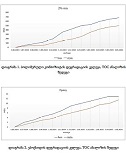
The degradation capability of the polymer composite was investigated using the following analytical chemistry methods: TOC (Total Organic Carbon determination method), IR (Infrared Spectroscopy, for assessing structural changes in the sample), and surface morphological changes using electron microscopy. Based on the obtained results, it can be stated that the polymer composite undergoes degradation in both acidic and alkaline environments. Due to time limitations, microbiological/natural soil degradation studies were not conducted within this research; this issue represents the next stage of the study.
It should also be noted that the introduction of the biodegradable polymer component into the epoxy matrix improved its mechanical properties, specifically the tensile strength. The composite's mechanical characteristic (stiffness - Young's modulus) improved by approximately 37%.
Downloads
Chikhradze, N., Abashidze, G., Kvinikadze, S., Kirtadze, L., & Vanishvili, A. (2021). BIODEGRADABLE POLYMER COMPOSITE MATERIALS WITH HIGH MECHANICAL PROPERTIES. International Multidisciplinary Scientific GeoConference: SGEM, 21(6.1), DOI: 10.5593/sgem2021/6.1/s26.41 https://doi.org/10.5593/sgem2021/6.1/s26.41
Kvinikadze, S., Tsverava, D., Vanishvili, A., Katsarava, R., & Chikhradze, N. (2023). Synthesis and characterization of amino acid-based, eco-friendly materials. In International Multidisciplinary Scientific GeoConference Surveying Geology and Mining Ecology Management (SGEMConference) (6.1/s26.42). DOI: 10.5593/sgem2023/6.1/s26.42 https://doi.org/10.5593/sgem2023/6.1/s26.42
D'Arcy, P. (2016). Film performance of Poly(lactic acid) blends for packaging applications (Master's thesis, Rochester Institute of Technology). RIT Digital Institutional Repository. https://repository.rit.edu/cgi/viewcontent.cgi?article=1048&context=japr
Baliashvili, G., Kvinikadze, S., Iashvili, T., Tsverava, D., & Vanishvili, A. (2024). DEVELOPMENT OF METAL-POLYMER LAMINATE WITH HIGH MECHANICAL PROPERTIES. International Multidisciplinary Scientific GeoConference: SGEM, 2024(6.1),DOI:10.5593/sgem2024/6.1/s24.04 https://doi.org/10.5593/sgem2024/6.1/s24.04
Kantaria, T., Kantaria, T., Vanishvili, A., Kvinikadze, S., Klinger, D., & Katsarava, R. (2023). Synthesis of New Degradable AB-Type Polyesters with 1,2,3-Triazole Rings in the Backbone via “Click” Step-Growth Polymerization. Asian Journal of Chemistry, 35(3), 649–654. https://doi.org/10.14233/ajchem.2023.27283
Kvinikadze, S., Kirtadze, L., & Vanishvili, A. (2021). Eco friendly polymer composites with high mechanical properties. Papers. https://papers.eta.edu.ge/index.php/papers/article/view/4600
Copyright (c) 2025 Georgian Scientists

This work is licensed under a Creative Commons Attribution-NonCommercial-NoDerivatives 4.0 International License.