
THE MANIFESTATION OF PHARMACOGENETIC AND CLINICAL PERSPECTIVES ON MEDICATION-ASSOCIATED EOSINOPHILIA AND SYSTEMIC SYMPTOMS (DRESS): A COMPREHENSIVE EVALUATION OF IMPLICATED AGENTS, RISK FACTORS, AND TREATMENT MANAGEMENTS STRATEGIES IN GENERAL

Downloads




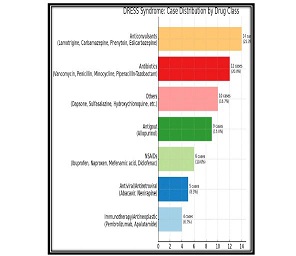
Drug Reaction with Eosinophilia and Systemic Symptoms (DRESS) is a complex, multifaceted, and potentially life-threatening hypersensitivity syndrome associated with a wide spectrum of pharmacologic agents. The syndrome is characterized by delayed onset, typically appearing several weeks after the initiation of the causative drug, and encompasses a constellation of clinical symptoms such as fever, rash, lymphadenopathy, hematologic abnormalities including eosinophilia or atypical lymphocytosis, and involvement of internal organs, most commonly the liver, kidneys, and lungs. DRESS has emerged as a significant challenge in modern pharmacotherapy, not only due to its diagnostic complexity and the variability in clinical manifestations but also because of the underlying pharmacogenetic and immunologic mechanisms that predispose susceptible individuals. The interplay of genetic predispositions, drug metabolism pathways, immune dysregulation, and environmental cofactors makes the management and prediction of DRESS both clinically and scientifically demanding. Pharmacogenetics plays a pivotal role in understanding the individual variability in the onset and severity of DRESS. Specific genetic markers, particularly certain human leukocyte antigen (HLA) alleles, have been closely linked to hypersensitivity reactions associated with particular medications. For instance, the HLA-B15:02 allele has been implicated in carbamazepine-induced DRESS, especially among individuals of Asian descent. Similarly, associations between allopurinol-induced DRESS and HLA-B58:01 have been strongly established. These pharmacogenetic insights have catalyzed efforts toward personalized medicine, where genetic screening before initiating therapy with high-risk drugs can significantly mitigate adverse reactions. In parallel, polymorphisms in genes encoding drug-metabolizing enzymes and transporters, such as cytochrome P450 isoenzymes, have also been implicated, suggesting that impaired detoxification of reactive drug metabolites may provoke an exaggerated immune response. The list of causative agents associated with DRESS is extensive and continues to expand with ongoing pharmacovigilance. Anticonvulsants, including phenytoin, carbamazepine, and lamotrigine, remain among the most commonly implicated drugs. Antimicrobials such as minocycline, vancomycin, and sulfonamides are also frequent offenders. Moreover, the increasing use of biologics and novel cancer immunotherapies has introduced new etiologic agents capable of triggering DRESS, further complicating the landscape of drug safety. The latency period, typically ranging from two to eight weeks, complicates the identification of the responsible drug, especially in polypharmacy scenarios. This underscores the necessity for robust clinical judgment, a detailed patient history, and interdisciplinary collaboration in managing suspected cases. Risk factors for the development of DRESS are multifactorial. In addition to genetic predisposition, factors such as age, ethnicity, comorbid autoimmune diseases, previous hypersensitivity reactions, and certain viral infections, particularly human herpesvirus 6 (HHV-6), play a contributory role. Viral reactivation has been recognized as both a potential trigger and an exacerbating factor, with some studies suggesting that it may drive systemic inflammation and prolong the course of illness. The presence of such cofactors not only amplifies the severity of DRESS but may also delay recovery and increase the risk of long-term complications such as autoimmune sequelae, which have been observed in a subset of patients following acute resolution. Diagnosis of DRESS remains largely clinical, supported by scoring systems such as RegiSCAR, which incorporates parameters including fever, rash, eosinophilia, organ involvement, and the exclusion of alternative etiologies. However, these criteria are not universally applied, and diagnostic delays are common, particularly in atypical or incomplete presentations. Research into the pathogenesis and treatment of DRESS continues to evolve. Advances in immunogenetics, transcriptomics, and systems biology are shedding light on the molecular pathways that mediate hypersensitivity reactions. These insights not only improve diagnostic accuracy but also open the door to novel therapeutic targets. Collaboration between clinicians, pharmacologists, geneticists, and regulatory bodies is essential to translate these discoveries into tangible benefits for patient safety. International registries and multicenter studies are needed to strengthen the evidence base, given the rarity of the condition and the variability in clinical practice. DRESS syndrome epitomizes the complexity of drug-induced hypersensitivity, where pharmacogenetics, immunology, and clinical medicine intersect. The syndrome requires a high index of suspicion, timely intervention, and multidisciplinary coordination to minimize morbidity and mortality. The future of DRESS management lies in personalized medicine, proactive risk stratification, and continued research into safer pharmacological alternatives. A comprehensive understanding of the implicated agents, risk factors, and therapeutic strategies is indispensable to improving patient outcomes and guiding evidence-based clinical decision-making.
Downloads
Aphkhazava, David, Nodar Sulashvili, and Jaba Tkemaladze. 2025. “Stem Cell Systems and Regeneration”. Georgian Scientists 7 (1):271-319. https://doi.org/10.52340/gs.2025.07.01.26.
Abusuliman, M., Amreia, M., Rehman, S., Chaudhary, A. J., Abosheaishaa, H., Jamali, T., & Hanafi, A. (2024). Fatal Itching and Failing Liver: A Case Report and Systematic review of Rare, Atypical DRESS (Drug Rash with Eosinophilia and Systemic Symptoms) Syndrome. Cureus. https://doi.org/10.7759/cureus.55355
Ajon, A. R. S., & Camara, P. T. A. (2024). Drug rash with eosinophilia and systemic symptoms (DRESS) due to multiple Anti-Epileptic Drug hypersensitivity. Cureus. https://doi.org/10.7759/cureus.65417
Al-Attar, M., De Santis, M., & Massarotti, M. (2019). DRESS syndrome in response to Denosumab: First documented case report. Bone Reports, 12, 100239.
Alotaibi, M. E., Saggese, S., Tawhari, I., Zheng, L., Nguyen, C. V., & Aggarwal, V. (2022). A case of drug reaction with eosinophilia and systemic symptoms (DRESS) syndrome in a patient receiving peritoneal dialysis with icodextrin exposure. Cureus.
Ambur, A. B., & Nathoo, R. (2021). Recurrent Drug-Induced Hypersensitivity Syndrome following bortezomib for multiple myeloma. Cureus.
Awad, A., Goh, M. S., & Trubiano, J. A. (2023). Drug reaction with eosinophilia and Systemic symptoms: A systematic review. The Journal of Allergy and Clinical Immunology in Practice, 11(6), 1856–1868.
Brockow, K., Garvey, L. H., Aberer, W., Atanaskovic‐Markovic, M., Barbaud, A., Bilo, M. B., Bircher, A., Blanca, M., Bonadonna, B., Campi, P., Castro, E., Cernadas, J. R., Chiriac, A. M., Demoly, P., Grosber, M., Gooi, J., Lombardo, C., Mertes, P. M., Mosbech, H., . . . Terreehorst, I. (2013). Skin test concentrations for systemically administered drugs – anENDA/EAACIDrug Allergy Interest Group position paper. Allergy, 68(6), 702–712.
Cacoub, P., Musette, P., Descamps, V., Meyer, O., Speirs, C., Finzi, L., & Roujeau, J. C. (2011). The DRESS Syndrome: A Systematic review. The American Journal of Medicine, 124(7), 588–597.
Calle, A. M., Aguirre, N., Ardila, J. C., & Villa, R. C. (2023). DRESS syndrome: A systematic review and treatment algorithm. World Allergy Organization Journal, 16(3), 100673.
Chalasani, S., Mannam, H., Alomari, A. K., & Rahnama-Moghadam, S. (2025). Drug reaction with eosinophilia and systemic symptoms to Vancomycin-Laden cement Space: a case report. Cureus.
Choudhary, R., Vinay, K., Srivastava, N., Bishnoi, A., Kamat, D., Parsad, D., Bhatia, A., & Kumaran, M. S. (2021). Clinical, biochemical, and serologic predictors of drug reaction with eosinophilia and systemic symptoms syndrome: A prospective case–control study. Journal of the American Academy of Dermatology, 85(4), 901–909.
Cornejo-Garcia, J., Blanca-Lopez, N., Dona, I., Andreu, I., Agundez, J., Carballo, M., Blanca, M., & Canto, M. (2009). Hypersensitivity reactions to Non-Steroidal Anti-Inflammatory drugs. Current Drug Metabolism, 10(9), 971–980. Criado, P. R., Ianhez, M., Miot, H. A., Criado, R. F. J., Talhari, C., & Ramos, P. M. (2024). DRESS syndrome: an interaction between drugs, latent viruses, and the immune system. Anais Brasileiros De Dermatologia.
Daldoul, M., Charfi, O., Zgolli, F., Ferchichi, K., Lakhoua, G., Kastalli, S., Daghfous, R., Zaiem, A., Aouinti, I., & Aidli, S. E. (2025). Drug reaction with eosinophilia and systemic symptoms syndrome to non-steroidal anti-inflammatory drugs: A report of case series and systematic review. Revue Française D’allergologie, 65(4), 104221.
Danjuma, M. I., Naseralallah, L. M. A., AbouJabal, B., Mohamed, M. F., Abubeker, I. Y., Jabbar, L. A., & Elzouki, A. (2021). An investigation into the avoidability of drug reaction with eosinophilia and systemic symptoms (DRESS) syndrome. Scientific Reports, 11(1). Dayanand, L., AY, R., & Nk, R. K. (2025). Adult-Onset Still’s disease with normal ferritin levels and severe Sulfasalazine-Induced probable case of drug reaction with eosinophilia and systemic symptoms (DRESS) syndrome: a unique presentation and management challenges. Cureus.
De Filippis, R., De Fazio, P., Kane, J., & Schoretsanitis, G. (2022). Co-occurrence of clozapine-related DRESS syndrome core clinical manifestations: results of a systematic review. European Psychiatry, 65(S1), S719.
De La Cruz, A. C., Ashraf, S., Shrestha, N., & Saad, M. (2021). Myocarditis and drug rash with eosinophilia and systemic symptoms syndrome: a deadly combination. Cureus.
Del Pozzo‐Magaña, B. R., Rieder, M. J., Garcia‐Bournissen, F., & Lazo‐Langner, A. (2022). Drug reaction with eosinophilia and systemic symptoms (DRESS): A tertiary care centre retrospective study. British Journal of Clinical Pharmacology, 88(9), 4134–4141.
Deore, R. (2024). Insights into Mefenamic Acid-Induced Allergic Reactions: A Comprehensive Clinical and Research Review. Open Access Journal of Pharmaceutical Research, 8(1).
Díaz, D. D., Mata, C. O., Herrejón, E. P., & Pérez, L. L. (2024). Adult respiratory distress syndrome (ARDS) due to omeprazole-induced drug reaction with eosinophilia and systemic symptoms (DRESS): Case report and review of the literature. Revista Española De Anestesiología Y Reanimación (English Edition), 71(10), 763–770.
Díaz-Molina, V., Tirado-Sánchez, A., & Ponce-Olivera, R. (2015). Clinical, aetiological and therapeutic findings in Drug Reaction with Eosinophilia and Systemic Symptoms (DRESS) syndrome, four years’ experience in a third-level Mexican hospital. Revista Médica Del Hospital General De México, 79(2), 55–62.
Dimeas, I. E., Sinis, S., Dimeas, G., Skrimizeas, S., & Daniil, Z. (2023). A unique case of conservatively treated actinomyces empyema complicated due to drug reaction with eosinophilia and systemic symptoms syndrome. Cureus.
Dridi, B., Agrebi, M., Sahnoun, D., & Salem, C. B. (2024). Metronidazole-Induced Drug Reaction with Eosinophilia and Systemic Symptoms (DRESS) Syndrome With Parvovirus B19 Reactivation: A Pediatric Case. Cureus.
Dutta, P., Das, S., & Fershko, A. (2021). Non-Aromatic Anticonvulsant (Divalproex sodium) Induced Drug Reaction with Eosinophilia and Systemic Symptoms (DRESS) Syndrome. Cureus.
Gangireddy, M., Sarao, M. S., Shrimanker, I., & Nookala, V. K. (2019). A Fatal Case of Vancomycin Associated Drug Reaction with Eosinophilia and Systemic Symptoms Syndrome in a Septuagenarian. Cureus.
Gayfield, S., Busken, J., & Mansur, S. (2022). Recurrent Leflunomide-Induced Drug Reaction with Eosinophilia and Systemic Symptom (DRESS) syndrome despite prolonged steroid taper: a case report. Cureus.
Gómez, D. a. G., Zorro, S. P., Barrios, W. A., & Bayona, J. a. C. (2020). Drug reaction with eosinophilia and systemic symptoms (DRESS) with severe and atypical lung involvement. Radiology Case Reports, 15(11), 2178–2182.
Gómez, D. a. G., Zorro, S. P., Barrios, W. A., & Bayona, J. a. C. (2020). Drug reaction with eosinophilia and systemic symptoms (DRESS) with severe and atypical lung involvement. Radiology Case Reports, 15(11), 2178–2182.
Hama, N., Abe, R., Gibson, A., & Phillips, E. J. (2022). Drug-Induced Hypersensitivity Syndrome (DIHS)/Drug Reaction with eosinophilia and Systemic Symptoms (DRESS): clinical features and pathogenesis. The Journal of Allergy and Clinical Immunology in Practice, 10(5), 1155-1167.e5.
Hamid, K., Jones, M. E., Huang, J., & Yu, J. C. (2023). Guselkumab-Associated Pulmonary Disease and Diffuse Alveolar Hemorrhage with Drug Rash with Eosinophilia and Systemic Symptoms. Cureus.
Hanna, M., & Yang, S. (2022). COVID-19 vaccine: A common suspect but rare culprit in drug rash with eosinophilia and systemic symptoms (DRESS) syndrome. Cureus.
Hansen, E., Gallardo, M., Yan, A., Mital, R., Jolley, D., McFeeters, J., Gray, A., Sitton, B., Kaffenberger, B. H., & Korman, A. M. (2024). Risk assessment of drugs associated with DRESS syndrome based on publication frequency: A systematic review. Journal of the American Academy of Dermatology, 91(5), 962–966.
Henriques, A., Guerra, M., Correia, I., Nunes, A. L., & Lima, J. (2025). Drug reaction with eosinophilia and systemic symptoms (DRESS) syndrome associated with celecoxib: a case report of a rare entity. Cureus.
Husain, Z., Reddy, B. Y., & Schwartz, R. A. (2013). DRESS syndrome. Journal of the American Academy of Dermatology, 68(5), 693.e1-693.e14.
Ilgin, S. E., Yanartaş, Ö., & Akça, E. (2024). Risperidone Induced DRESS Syndrome: A case report. European Psychiatry, 67(S1), S700.
Isaacs, M., Cardones, A. R., & Rahnama-Moghadam, S. (2018). DRESS syndrome: clinical myths and pearls. PubMed, 102(5), 322–326.
James, F., Goh, M. S., Vogrin, S., Ng, I., Douglas, A. P., Holmes, N. E., Chua, K. Y., De Luca, J., Sharma, P., Zubrinich, C., Aung, A. K., Gin, D., Lambros, B., Baker, C., Foley, P., Chong, A. H., Thien, F., Fok, J. S., Su, J., . . . Trubiano, J. A. (2024). The Australasian Registry for Severe Cutaneous Adverse Reactions (AUS-SCAR) – Providing a roadmap for closing the diagnostic, patient, and healthcare gaps for a group of rare drug eruptions. World Allergy Organization Journal, 17(8), 100936.
Jayakumar, A., S, H., Philip, T., & Jomey, M. R. (2024). Leflunomide-Induced Drug Reaction with eosinophilia and Systemic Symptoms: a diagnostic dilemma. Cureus.
Jiamsathit, W., Bunarong, K., Papenkort, S., Cox, A. R., & Jarernsiripornkul, N. (2025). Drug-Induced serious cutaneous reactions in hospitalized patients: a Cross-Sectional study. Journal of Clinical Medicine, 14(3), 857.
Jörg, L., Helbling, A., Yerly, D., & Pichler, W. J. (2020). Drug-related relapses in drug reaction with eosinophilia and systemic symptoms (DRESS). Clinical and Translational Allergy, 10(1).
Kanabaj, K., Jenerowicz, D., Jankowska, L., & Żaba, Z. (2023). DRESS syndrome – A dermatological emergency – Sulfasalazine-related acute drug reaction case report. Heliyon, 9(9), e20021.
Kardaun, S., Sekula, P., Valeyrie-Allanore, L., Liss, Y., Chu, C., Creamer, D., Sidoroff, A., Naldi, L., Mockenhaupt, M., & Roujeau, J. (2013). Drug reaction with eosinophilia and systemic symptoms (DRESS): an original multisystem adverse drug reaction. Results from the prospective RegiSCAR study. British Journal of Dermatology, 169(5), 1071–1080.
Kawakami, T., Fujita, A., Takeuchi, S., Muto, S., & Soma, Y. (2008). Drug-induced hypersensitivity syndrome: Drug reaction with eosinophilia and systemic symptoms (DRESS) syndrome induced by aspirin treatment of Kawasaki disease. Journal of the American Academy of Dermatology, 60(1), 146–149.
Kim, M., Kang, D. Y., Nam, Y., Sim, D. W., Kim, S., Lee, J. K., Park, J., Park, H., Jung, J., Kim, C., Yang, M., Kim, J., Ye, Y., Koh, Y., Kang, H., Park, S. J., & Kim, S. (2023). Clinical aspects of severe cutaneous adverse reactions caused by beta-lactam antibiotics: A study from the Korea SCAR registry. World Allergy Organization Journal, 16(1), 100738.
Aphkhazava, D., Sulashvili, N., Tupinashvili, T., & Nozadze, M. (2024). Dynamic Cellular Equilibrium Theory of Aging: Integrating Maintenance and Accumulation in the Aging Process. Scientific Journal „Spectri“, 8(2). https://doi.org/10.52340/spectri.2023.08.02.03
Aphkhazava, D., Tuphinashvili, T., Sulashvili, N., & Nozadze, M. (2023). The Features and Role of SHP2 Protein in Postnatal Muscle Development. Scientific Journal „Spectri“, 1. https://doi.org/10.52340/spectri.2023.01
Sulashvili N, Nimangre RR. MANIFESTATION OF SOME ASPECTS OF CARDIOVASCULAR DISEASES, IMPLICATIONS, PHARMACOTHERAPEUTIC STRATEGIES, EFFECTS, IMPACTS AND POTENTIAL HAZARDS IN GENERAL. JR [Internet]. 2025 Feb. 7 [cited 2025 May 22];3(1):1-27. Available from: https://journals.4science.ge/index.php/jr/article/view/3393.
Nodar Sulashvili, Nana Gorgaslidze, Margarita Beglaryan, Luiza Gabunia, Nato Alavidze, Nino Abuladze, Marina Giorgobiani, Marika Sulashvili, Tamar Okropiridze, and Lali Patsia. 2025. “THE SCIENTIFIC DISCOURSE OF KEY ISSUE ASPECTS OF FEATURES OF CANDIDA PROBLEMS, ANTIFUNGAL DRUGS RESISTANCE CONCERNS, MYCOTOXICOLOGY ISSUES, MYCOECOLOGY, BIOSAFETY RISKS AND EMERGING SOLUTIONS”. Modern Scientific Method, no. 9 (March). https://ojs.scipub.de/index.php/MSM/article/view/5423.
Chen, Che-Hung, et al. “Pharmacogenetics of Drug Hypersensitivity: Clinical Implications and Future Directions.” Current Drug Metabolism 15, no. 3 (2014): 265–76.
Kardaun, Sylvia H., and Jean-Claude Roujeau. “DRESS Syndrome or Drug Reaction with Eosinophilia and Systemic Symptoms: Why the RegiSCAR Scoring System Should Be Used.” British Journal of Dermatology 169, no. 5 (2013): 1001–2.
Cho, Young-Min, et al. “Long-Term Outcomes of Drug Reaction with Eosinophilia and Systemic Symptoms (DRESS) Syndrome: A Retrospective Study of 33 Patients.” Journal of the American Academy of Dermatology 68, no. 4 (2013): 558–66.
Shiohara, Tetsuo, and Yumi Kano. “Drug Reaction with Eosinophilia and Systemic Symptoms (DRESS): Incidence, Pathogenesis and Management.” Expert Opinion on Drug Safety 16, no. 2 (2017): 139–47.
Cacoub, Patrice, et al. “The DRESS Syndrome: A Literature Review.” The American Journal of Medicine 124, no. 7 (2011): 588–97. https://doi.org/10.1016/j.amjmed.2011.01.017.
Husain, Zahir, Sherrie Reddy, and Robert K. Schwartz. “DRESS Syndrome: Part I. Clinical Perspectives.” Journal of the American Academy of Dermatology 68, no. 5 (2013): 693.e1–693.e14.
Descamps, Vincent, et al. “Management of Drug Reaction with Eosinophilia and Systemic Symptoms (DRESS): A Retrospective Study of 38 Cases.” Archives of Dermatology 145, no. 12 (2009): 1373–80.
Yang, Chia-Yu, et al. “Pharmacogenetics and Genomic Biomarkers of Severe Cutaneous Adverse Reactions.” Current Pharmacogenomics and Personalized Medicine 15, no. 3 (2017): 179–90.
Kang, Hye-Won, et al. “Clinical Features and Outcomes of Drug Reaction with Eosinophilia and Systemic Symptoms (DRESS) in Korean Patients.” Allergy, Asthma & Immunology Research 11, no. 4 (2019): 507–15.
Pichler, Werner J. “Drug Hypersensitivity Reactions: Classification and Relationship to T-Cell Activation.” Current Opinion in Allergy and Clinical Immunology 8, no. 4 (2008): 291–96. https://doi.org/10.1097/ACI.0b013e3283060c8c.
Copyright (c) 2025 Georgian Scientists

This work is licensed under a Creative Commons Attribution-NonCommercial-NoDerivatives 4.0 International License.