International Approaches to Psychosocial Risk Assessment in Healthcare

Downloads




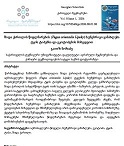
The article examines international practices of psychosocial risk assessment and management in the healthcare sector. It reviews the theoretical foundations of psychosocial risks, including the Job Demand-Control Model and the Effort-Reward Imbalance Model. Particular attention is paid to major psychosocial hazards affecting healthcare workers, such as occupational stress, burnout, excessive workload, and emotional labour. The study discusses contemporary psychosocial risk assessment tools, including COPSOQ and ISTAS21, as well as the importance of organizational and individual intervention strategies. The experiences of Spain, France, and Estonia are analyzed and compared to identify effective approaches to psychosocial risk management. The findings demonstrate that successful management of psychosocial risks is based on preventive, systematic, and employee-centered approaches, contributing to the protection of healthcare workers’ health and the improvement of healthcare service quality.
Downloads
European Agency for Safety and Health at Work. (n.d.). Psychosocial risks and mental health at work. https://osha.europa.eu
Karasek, R. A. (1979). Job demands, job decision latitude, and mental strain. Administrative Science Quarterly, 24(2), 285–308.
Siegrist, J. (1996). Adverse health effects of high-effort/low-reward conditions. Journal of Occupational Health Psychology, 1(1), 27–41.
Maslach, C., & Jackson, S. E. (1981). The measurement of experienced burnout. Journal of Occupational Behaviour, 2(2), 99–113.
International Labour Organization. (n.d.). Psychosocial risks and stress at work. https://www.ilo.org
World Health Organization. (n.d.). Occupational hazards in the health sector: Psychosocial risks and mental health. https://www.who.int
European Agency for Safety and Health at Work. (n.d.). Mental health at work: Practical resources. https://osha.europa.eu
Copenhagen Psychosocial Questionnaire (COPSOQ) International Network. (n.d.). Copenhagen Psychosocial Questionnaire (COPSOQ). https://www.copsoq-network.org
European Psychiatry Journal. (n.d.). Studies on COPSOQ use in the healthcare sector.
World Health Organization. (n.d.). Mental health at work. https://www.who.int
International Labour Organization. (n.d.). Psychosocial risks and stress at work. https://www.ilo.org
European Agency for Safety and Health at Work. (n.d.). Psychosocial risks and mental health. https://osha.europa.eu
National Institute for Safety and Health at Work (INSST). (n.d.). Psychosocial risks in the workplace. https://www.insst.es
ISTAS21. (n.d.). Spanish adaptation of the COPSOQ questionnaire. https://istas.net
European Foundation for the Improvement of Living and Working Conditions (Eurofound). (n.d.). Working conditions and psychosocial risks. https://www.eurofound.europa.eu
SEPRI. (n.d.). Psychosocial risk management practices and organizational interventions.
International Journal of Environmental Research and Public Health. (n.d.). Studies on burnout and occupational stress in healthcare. https://www.mdpi.com/journal/ijerph
Ministère du Travail. (n.d.). Regulations on psychosocial risks. https://travail-emploi.gouv.fr
Lanchava, O., Bulia, N., & Darakhvelidze, M. (2025). Ensuring occupational safety in the medical sector: Key problems, systemic challenges, and strategic recommendations. Georgian Scientists, 7(2), 614–625. https://doi.org/10.52340/gs.2025.07.02.56
Copyright (c) 2026 Georgian Scientists

This work is licensed under a Creative Commons Attribution-NonCommercial-NoDerivatives 4.0 International License.