მელატონინის რეცეპტორების განაწილების თავისებურებები ძუძუს კიბოსა და კიბოსწინარე დაზიანებების სხვადასხვა ჰისტოლოგიურ ტიპებში

ჩამოტვირთვები




მელატონინი წარმოადგენს მრავალფუნქციურ ჰორმონს, რომელიც მნიშვნელოვან როლს ასრულებს ცირკადული რიტმების რეგულაციაში, ანტიოქსიდანტურ დაცვაში, იმუნური პასუხის მოდულაციასა და სიმსივნის საწინააღმდეგო მექანიზმებში. ბოლო წლებში განსაკუთრებული ყურადღება ეთმობა მელატონინის რეცეპტორების (MT1 და MT2) როლს ძუძუს კიბოს ბიოლოგიაში, მათ შორის სიმსივნის პროგრესირებაში, ჰორმონულ რეგულაციასა და მკურნალობისადმი მგრძნობელობაში.
აღნიშნული ლიტერატურის მიმოხილვის მიზანია ლიტერატურული მონაცემების კრიტიკული ანალიზი მელატონინის რეცეპტორების ექსპრესიის, ბიოლოგიური ფუნქციებისა და კლინიკური მნიშვნელობის შესახებ ძუძუს კიბოსა და კიბოსწინარე დაზიანებების სხვადასხვა ჰისტოლოგიურ და მოლეკულურ ტიპებში.
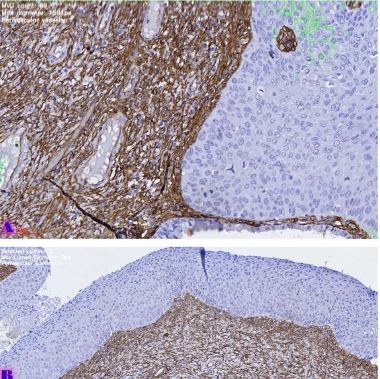
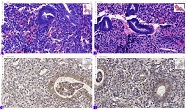
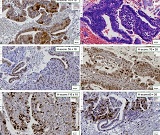
არსებული ლიტერატურული მონაცემები მიუთითებს, რომ MT1 და MT2 რეცეპტორები მნიშვნელოვან გავლენას ახდენენ უჯრედული ციკლის რეგულაციაზე, აპოპტოზის ინდუქციაზე, ანგიოგენეზისა და მეტასტაზირების პროცესებზე. მელატონინის რეცეპტორების ექსპრესია უფრო მაღალია ჰორმონრეცეპტორ-დადებით სიმსივნეებში, განსაკუთრებით ლუმინალურ ქვეტიპებში, ხოლო სამმაგად უარყოფით კარცინომებში ხშირად დაქვეითებულია. მელატონინის სიგნალიზაცია ასოცირებულია ესტროგენის რეცეპტორული აქტივობის შემცირებასთან, ოქსიდაციური სტრესის დათრგუნვასთან და სიმსივნის პროგრესირების შეზღუდვასთან. ასევე აღინიშნება მელატონინის რეცეპტორების არსებობა ძუძუს სადინის ატიპიურ ჰიპერპლაზიასა და სადინრულ კარცინომა in situ-ში, რაც მათ პოტენციურ პროგნოზულ ბიომარკერებად წარმოაჩენს.
მელატონინის რეცეპტორები წარმოადგენენ პერსპექტიულ ბიოლოგიურ და კლინიკურ სამიზნეებს ძუძუს კიბოსა და კიბოსწინარე დაზიანებების კვლევაში. მათი ექსპრესიის შეფასებამ შესაძლოა ხელი შეუწყოს დაავადების პროგნოზის გაუმჯობესებას, რისკის სტრატიფიკაციასა და ინდივიდუალურად მორგებული თერაპიული სტრატეგიების შემუშავებას.
Downloads
S. R. Pandi-Perumal et al., “Physiological effects of melatonin: Role of melatonin receptors and signal transduction pathways,” Prog. Neurobiol., vol. 85, no. 3, pp. 335–353, Jul. 2008, doi: 10.1016/J.PNEUROBIO.2008.04.001.
S. Agbaria, A. Haim, F. Fares, and A. E. Zubidat, “Epigenetic modification in 4T1 mouse breast cancer model by artificial light at night and melatonin–the role of DNA-methyltransferase,” Chronobiol. Int., vol. 36, no. 5, pp. 629–643, May 2019, doi: 10.1080/07420528.2019.1574265.
K. Linowiecka et al., “Melatonin: A Potential Regulator of DNA Methylation,” Antioxidants, vol. 12, no. 6, Jun. 2023, doi: 10.3390/ANTIOX12061155.
X. Kong et al., “Melatonin: A Potential Therapeutic Option for Breast Cancer,” Trends in Endocrinology and Metabolism, vol. 31, no. 11, pp. 859–871, Nov. 2020, doi: 10.1016/J.TEM.2020.08.001.
B. Del Río, J. M. Garćia Pedrero, C. Martínez-Campa, P. Zuazua, P. S. Lazo, and S. Ramos, “Melatonin, an endogenous-specific inhibitor of estrogen receptor α via calmodulin,” Journal of Biological Chemistry, vol. 279, no. 37, pp. 38294–38302, Sep. 2004, doi: 10.1074/JBC.M403140200.
M. Ashrafizadeh, M. Najafi, N. Kavyiani, R. Mohammadinejad, T. Farkhondeh, and S. Samarghandian, “Anti-Inflammatory Activity of Melatonin: a Focus on the Role of NLRP3 Inflammasome,” Inflammation, vol. 44, no. 4, pp. 1207–1222, Aug. 2021, doi: 10.1007/S10753-021-01428-9.
M. A. Abd El-Aziz, H. A. Hassan, M. H. Mohamed, A. R. M. A. Meki, S. K. H. Abdel-Ghaffar, and M. R. Hussein, “The biochemical and morphological alterations following administration of melatonin, retinoic acid and Nigella sativa in mammary carcinoma: An animal model,” Int. J. Exp. Pathol., vol. 86, no. 6, pp. 383–396, Dec. 2005, doi: 10.1111/J.0959-9673.2005.00448.X.
G. B. Gelaleti et al., “Efficacy of melatonin, IL-25 and siIL-17B in tumorigenesis-associated properties of breast cancer cell lines,” Life Sci., vol. 183, pp. 98–109, Aug. 2017, doi: 10.1016/J.LFS.2017.06.013.
J. Liu, S. J. Clough, A. J. Hutchinson, E. B. Adamah-Biassi, M. Popovska-Gorevski, and M. L. Dubocovich, “MT1 and MT2 Melatonin Receptors: A Therapeutic Perspective,” Annu. Rev. Pharmacol. Toxicol., vol. 56, pp. 361–383, Jan. 2016, doi: 10.1146/ANNUREV-PHARMTOX-010814-124742.
B. Bojková, P. Kubatka, T. Qaradakhi, A. Zulli, and K. Kajo, “Melatonin may increase anticancer potential of pleiotropic drugs,” Int. J. Mol. Sci., vol. 19, no. 12, Dec. 2018, doi: 10.3390/IJMS19123910.
W. H. Talib, A. R. Alsayed, A. Abuawad, S. Daoud, and A. I. Mahmod, “Melatonin in cancer treatment: Current knowledge and future opportunities,” Molecules, vol. 26, no. 9, May 2021, doi: 10.3390/MOLECULES26092506.
C. Rodriguez et al., “Regulation of antioxidant enzymes: A significant role for melatonin,” J. Pineal Res., vol. 36, no. 1, pp. 1–9, Jan. 2004, doi: 10.1046/J.1600-079X.2003.00092.X.
“Melatonin and Breast Cancer: A Review Article - PMC.” Accessed: May 29, 2026. [Online]. Available: https://pmc.ncbi.nlm.nih.gov/articles/PMC12133437/
J. B. Zawilska, D. J. Skene, and J. Arendt, “Physiology and pharmacology of melatonin in relation to biological rhythms,” Pharmacological Reports, vol. 61, no. 3, pp. 383–410, 2009, doi: 10.1016/S1734-1140(09)70081-7.
J. A. Gastel, P. H. Roseboom, P. A. Rinaldi, J. L. Weller, and D. C. Klein, “Melatonin production: Proteasomal proteolysis in serotonin N- acetyltransferase regulation,” Science (1979)., vol. 279, no. 5355, pp. 1358–1360, Feb. 1998, doi: 10.1126/SCIENCE.279.5355.1358.
R. Jockers, P. Maurice, J. A. Boutin, and P. Delagrange, “Melatonin receptors, heterodimerization, signal transduction and binding sites: What’s new?,” Br. J. Pharmacol., vol. 154, no. 6, pp. 1182–1195, Jul. 2008, doi: 10.1038/BJP.2008.184.
S. Kepuladze, G. Burkadze, I. Kokhreidze, S. Kepuladze, G. Burkadze, and I. Kokhreidze, “Epithelial-Mesenchymal Transition Indexes in Triple-Negative Breast Cancer Progression and Metastases,” Cureus, vol. 16, no. 9, Sep. 2024, doi: 10.7759/CUREUS.68761.
Kepuladze Shota+Burkadze George+Kokhreidze Irakli, “THE CHARACTERISTICS OF EPITHELIAL MESENCHYMAL TRANSITION IN DIFFERENT MOLECULAR SUBTYPES OF PRIMARY AND METASTATIC INVASIVE DUCTAL CARCINOMA OF THE BREAST (CRITICAL REVIEW),” Experimental.and.clinical.medicine, no. Number2, 2021, Accessed: Sep. 06, 2024. [Online]. Available: https://journals.4science.ge/index.php/jecm/article/view/334/344
S. Kepuladze, I. Kokhreidze, and G. Burkadze, “COMPARING CHANGES IN EPITHELIAL-MESENCHYMAL TRANSFORMATION MARKERS IN DIFFERENT TUMOR SITES OF BREAST CANCER WITH HER2-POSITIVE MOLECULAR SUBTYPE,” ქართველი მეცნიერები, vol. 5, no. 2, pp. 134–149, May 2023, doi: 10.52340/gs.2023.05.02.17.
N. Amin, R. Shafabakhsh, R. J. Reiter, and Z. Asemi, “Melatonin is an appropriate candidate for breast cancer treatment: Based on known molecular mechanisms,” J. Cell. Biochem., vol. 120, no. 8, pp. 12208–12215, Aug. 2019, doi: 10.1002/JCB.28832.
J. P. I. L. J. K. S. P. J. K. NR Shin, “Melatonin suppresses fibrotic responses induced by cigarette smoke via downregulation of TGF-beta1,” Oncotarget, vol. 8, pp. 95692–95703, 2017.
D. Cataldo, G. Aravena, A. Escobar, J. C. Tapia, O. A. Peralta, and C. G. Torres, “Effect of Melatonin on Chemoresistance Exhibited by Spheres Derived from Canine Mammary Carcinoma Cells.,” Animals (Basel)., vol. 14, no. 8, Apr. 2024, doi: 10.3390/ani14081229.
P. Lotfinejad et al., “Prognostic Role and Clinical Significance of Tumor-Infiltrating Lymphocyte (TIL) and Programmed Death Ligand 1 (PD-L1) Expression in Triple-Negative Breast Cancer (TNBC): A Systematic Review and Meta-Analysis Study,” Diagnostics, vol. 10, no. 9, Sep. 2020, doi: 10.3390/diagnostics10090704.
R. Goyal, T. Gupta, A. Bal, D. Sahni, and G. Singh, “Role of Melatonin in Breast Carcinoma: Correlation of Expression Patterns of Melatonin-1 Receptor with Estrogen, Progesterone, and HER2 Receptors,” Applied Immunohistochemistry and Molecular Morphology, vol. 28, no. 7, pp. 518–523, Aug. 2020, doi: 10.1097/PAI.0000000000000788.
S. Kepuladze, I. Kokhreidze, and G. Burkadze, “Comparative analysis of phenotypic features in the primary tumor, tumour buds and metastatic lymph nodes within Luminal A and Luminal B molecular subtypes of invasive ductal carcinoma of the breast,” ქართველი მეცნიერები, vol. 4, no. 2, pp. 117–140, Apr. 2022, doi: 10.52340/gs.2022.04.02.09.
S. Kepuladze, I. Kokhreidze, and G. Burkadze, “Comparative analysis of phenotypic features in the primary tumor, tumour buds and metastatic lymph nodes within Luminal A and Luminal B molecular subtypes of invasive ductal carcinoma of the breast,” GEORGIAN SCIENTISTS, vol. 4, no. 2, pp. 117–140, Apr. 2022, doi: 10.52340/gs.2022.04.02.09.
P. D. Rädler et al., “Highly metastatic claudin-low mammary cancers can originate from luminal epithelial cells,” Nat. Commun., vol. 12, no. 1, Dec. 2021, doi: 10.1038/S41467-021-23957-5.
C. M. Heaphy et al., “Shorter telomeres in luminal B, HER-2 and triple-negative breast cancer subtypes,” Modern Pathology, vol. 24, no. 2, pp. 194–200, 2011, doi: 10.1038/MODPATHOL.2010.198.
K. Ennour-Idrissi, E. Maunsell, and C. Diorio, “Telomere length and breast cancer prognosis: A systematic review,” Cancer Epidemiology Biomarkers and Prevention, vol. 26, no. 1, pp. 3–10, Jan. 2017, doi: 10.1158/1055-9965.EPI-16-0343.
P. Liu et al., “Melatonin Regulates Breast Cancer Progression by the lnc010561/miR-30/FKBP3 Axis,” Mol. Ther. Nucleic Acids, vol. 19, pp. 765–774, Mar. 2020, doi: 10.1016/J.OMTN.2019.12.019.
M. Kammori et al., “Telomere shortening in breast cancer correlates with the pathological features of tumor progression,” Oncol. Rep., vol. 34, no. 2, pp. 627–632, Aug. 2015, doi: 10.3892/OR.2015.4063.
J. J. García et al., “Protective effects of melatonin in reducing oxidative stress and in preserving the fluidity of biological membranes: A review,” J. Pineal Res., vol. 56, no. 3, pp. 225–237, 2014, doi: 10.1111/JPI.12128.
S. M. Hill, L. L. Spriggs, M. A. Simon, H. Muraoka, and D. E. Blask, “The growth inhibitory action of melatonin on human breast cancer cells is linked to the estrogen response system,” Cancer Lett., vol. 64, no. 3, pp. 249–256, Jul. 1992, doi: 10.1016/0304-3835(92)90050-6.
P. R. Custódio, J. Colombo, F. V. Ventura, T. B. Castro, and D. A. P. C. Zuccari, “Melatonin Treatment Combined with TGF-β Silencing Inhibits Epithelial- Mesenchymal Transition in CF41 Canine Mammary Cancer Cell Line,” Anticancer Agents Med. Chem., vol. 20, no. 8, pp. 989–997, Apr. 2020, doi: 10.2174/1871520620666200407122635.
M. Rondanelli, M. A. Faliva, S. Perna, and N. Antoniello, “Update on the role of melatonin in the prevention of cancer tumorigenesis and in the management of cancer correlates, such as sleep-wake and mood disturbances: Review and remarks,” Aging Clin. Exp. Res., vol. 25, no. 5, pp. 499–510, Oct. 2013, doi: 10.1007/S40520-013-0118-6.
W. H. Talib, “A ketogenic diet combined with melatonin overcomes cisplatin and vincristine drug resistance in breast carcinoma syngraft,” Nutrition, vol. 72, Apr. 2020, doi: 10.1016/J.NUT.2019.110659.
S. Proietti et al., “Melatonin down-regulates MDM2 gene expression and enhances p53 acetylation in MCF-7 cells,” J. Pineal Res., vol. 57, no. 1, pp. 120–129, 2014, doi: 10.1111/JPI.12150.
A. González, A. González-González, C. Alonso-González, J. Menéndez-Menéndez, C. Martínez-Campa, and S. Cos, “Complementary actions of melatonin on angiogenic factors, the angiopoietin/Tie2 axis and VEGF, in co-cultures of human endothelial and breast cancer cells,” Oncol. Rep., vol. 39, no. 1, pp. 433–441, Jan. 2018, doi: 10.3892/OR.2017.6070.
S. Xiang et al., “Epigenetic inhibition of the tumor suppressor ARHI by light at night-induced circadian melatonin disruption mediates STAT3-driven paclitaxel resistance in breast cancer,” J. Pineal Res., vol. 67, no. 2, 2019, doi: 10.1111/JPI.12586.
N. F. Maroufi et al., “Inhibitory effect of melatonin on hypoxia-induced vasculogenic mimicry via suppressing epithelial-mesenchymal transition (EMT) in breast cancer stem cells.,” Eur. J. Pharmacol., vol. 881, Aug. 2020, doi: 10.1016/J.EJPHAR.2020.173282.
H. Schwimmer et al., “Light at night and melatonin have opposite effects on breast cancer tumors in mice assessed by growth rates and global DNA methylation,” Chronobiol. Int., vol. 31, no. 1, pp. 144–150, Feb. 2014, doi: 10.3109/07420528.2013.842925.
საავტორო უფლებები (c) 2026 ქართველი მეცნიერები

ეს ნამუშევარი ლიცენზირებულია Creative Commons Attribution-NonCommercial-NoDerivatives 4.0 საერთაშორისო ლიცენზიით .