Integrated Particle Size Classification and Baromembrane Filtration for Fouling Control in Natural Water Treatment

Downloads




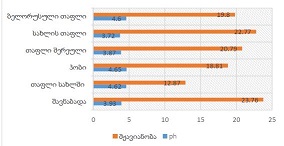
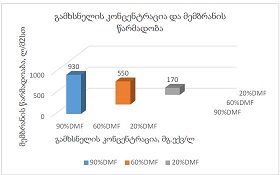
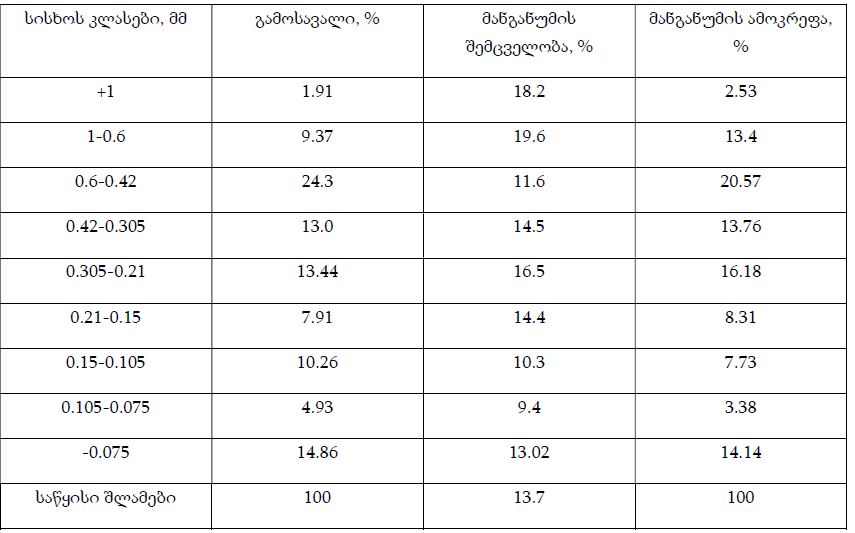
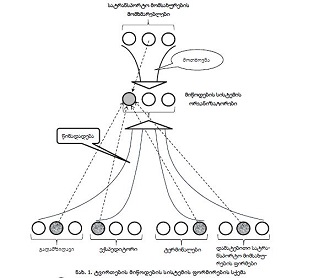
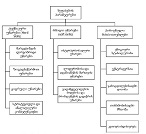
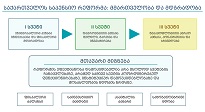
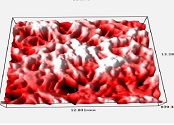
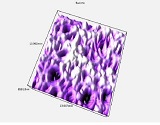
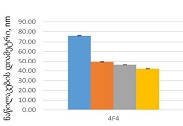
This article presents the results of theoretical and experimental studies on the mechanisms of natural water contamination via nanofiltration under turbulent flow conditions. A particle size classifier for natural waters has been developed that effectively describes the composition of the water; based on this, appropriate baromembrane filtration processes can be selected to ensure the gradual removal of particles of various sizes. The particle size classifier for natural waters serves as a tool for elucidating the mechanisms of nanofiltration fouling. Filtration of natural waters and model solutions was conducted under turbulent flow conditions (Re > 4000) using a laboratory cross-flow module and polyamide membranes with varying selectivity. It was found that the particle size distribution (PSD) of the deposit formed on the membrane surface systematically changes with membrane selectivity. A membrane with 80% selectivity retained larger particles (d₅₀ ≈ 5–15 μm). A membrane with 96% selectivity retained smaller colloids (d₅₀ ≈ 0.5–2 μm), increasing the fraction of 10–500 nm particles. Direct nanofiltration of highly turbid solutions (FTU 10–50) leads to rapid membrane fouling and a significant reduction in flux (>70%). Therefore, it is recommended to perform preliminary micro- and ultrafiltration of highly turbid solutions, reducing turbidity to FTU 2, followed by nanofiltration, which ensures the production of sterile water from heavily contaminated natural water. It was found that as membrane selectivity increases, the particle size distribution (PSD) shifts toward smaller colloids (10–500 nm), leading to the formation of a more compact precipitate. The results confirm that the particle size classifier in natural waters is an effective tool for studying contamination mechanisms and optimizing nanofiltration systems.
Downloads
H. Guo, X. Li, W. Yang, Z. Yao, Y. Mei, L.E. Peng, et al. Nanofiltration for drinking water treatment: a review Front Chem Sci Eng, pp. 681-698, (2022).
M. Wanjiya, J.-C. Zhang, B. Wu, M.-J. Yin, Q.-F. An Nanofiltration membranes for sustainable removal of heavy metal ions from polluted water: a review and future perspective Desalination, 578, Article 117441, (2024).
Guo Y, Yao J, Yan W, Du Y, Yu K, Wang X, Xiao K, Huang X. Membrane fouling in engineering nanofiltration process for drinking water treatment: The spatial and chemical aspects. J Memb Sci; 695; (2024).
Hendrik J. de Vries, Alfons J. M. Stams, Caroline M. Plugge CM. Biodiversity and ecology of microorganisms in high pressure membrane filtration systems. Water Research, Volume 172, 151, (2020).
Chon K, Cho J. Fouling behavior of dissolved organic matter in nanofiltration membranes from a pilot-scale drinking water treatment plant: an autopsy study. Chem Eng J. 295:268–77, (2016).
G. Bibileishvili, L. Ebanoidze, M. Kezherashvili, M. Mamulashvili, L. Kuparadze, N. Butkhuzi, I. Gogiberidze. Colloidal-Chemical Study of Sediment Formed Natural Water on a Microfiltration Membrane. Georgian Scientists, V.7, №4, pp.435-439, (2025).
G. Bibileishvili, M. Kezherashvili, Z. Javashvili, N. Gogesashvili, E. Kakabadze, N.Butkhuzi. Investigation of Optimal Mode Parameters of Nanofiltration Separation Process. Georgian Scientists, V.7, №4, 2025. pp.444-448, (2025).
G. V. Bibileishvili, M. G. Kezherashvili, M. A. Mamulashvili: Effect of Different Solvent and Fore-forming Agent on Morphology and Performance of Polyethersulfone Membranes. Oxid Commun,47 (3), (2024).
G. Bibileishvili, M. Kezherashvili, N. Gogesashvili, L. Kuparadze: Influence of Some Factors on Characteristics of Poly-m-phenylene-isophthalamide Membranes-Preparation and Examination of Polyamide Membranes. Oxid Commun, 45 (2), 300 (2022).
Yu W, Liu T, Crawshaw J, Liu T, Graham N. Ultrafiltration and nanofiltration membrane fouling by natural organic matter: Mechanisms and mitigation by preozonation and pH. Water Res; 139:353–62, (2018).
Copyright (c) 2026 Georgian Scientists

This work is licensed under a Creative Commons Attribution-NonCommercial-NoDerivatives 4.0 International License.