Psychoanalysis of Justice and Prospects for Improvement (Transformation of Corruptive Motivation)

Downloads




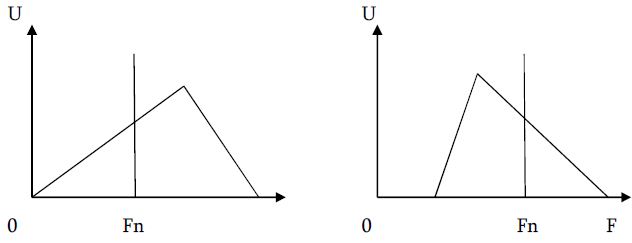
The article attempts to show the insufficiency of the legal sphere's attention to the consequences of criminal behavior, which misses the opportunity to clarify the causes of these consequences. The field of psychology, which is engaged in clarifying the causes of this criminal behavior, has the resources to better explain both the circumstances of the formation of law-breaking behavior and the mechanisms for correcting this behavior, which are inaccessible to the legal sphere. Corruption, as one of the types of criminal behavior, also reaches the court due to the presence of strong natural tendencies in it. This tendency consists in the preferential choice of the more beneficial alternative of behavior in a choice situation, which cannot be hindered by any punitive measures until the transformation of the motivation causing criminal behavior from negative to positive is achieved. Corruption stems from negative motivation, which can only be transformed into positive motivation through the use of a legal mechanism of financial rewards. Such a legal transfer of a “decent fee” from the plaintiff to the judge from the amount of financial compensation transferred by the defendant to the plaintiff at the request of the court, which will sharply reduce the defendant’s corrupt manipulations in court.
Downloads
Abraham, J., Suleeman, J., & Takwin, B. (2018). The Psychology of Corruption: The Role of the Counterfeit Self, Entity Self-Theory, and Outcome-Based Ethical Mindset. Journal of
Psychological and Educational Research, 26(2), 7–32.
Bangalore Principles of Judicial Conduct (2018). United Nations Office on Drags and Crime, Unated Nations, Vienna
Buscaglia, E. (1999). An analysis of the causes of corruption in the judiciary. Law and Policy in International Business, 30(4), 95–116.
Buscaglia, E. (2001). An analysis of judicial corruption and its causes: An objective governing-based approach. International Review of Law and Economics, 21(2), 233–249.
Dakolias, M., & Thachuk, K. L. (2000). Attacking corruption in the judiciary: A critical process in judicial reform. Wisconsin International Law Journal, 18(2), 353–453.
Descartes Rene (2006). A Discourse on the Method. Translated by Ian Maclean. Oxford University Press
Freud Sigmund (1923). Introductory lectures on psycho-analyses (J. Riviera, Trans.). London,
Allend & Unwin.
Gloppen, S. (2011). Courts, corruption and judicial independence. In S. Rose-Ackerman & T. Søreide (Eds.), International Handbook on the Economics of Corruption (Vol. 2, pp. 68–95).
Gloppen, S. (2013). Judicial independence and corruption: Challenges in developing judiciaries. U4 Anti-Corruption Resource Centre Brief, 2013(4), 1–4. CMI Publication
Holmberg, S., & Rothstein, B. (2012). Dying of corruption: The impact of judicial and administrative integrity on global well-being. World Development, 40(1), 62–72.
International Commission of Jurists. (2000). Policy framework for preventing and eliminating corruption and ensuring impartiality of the judicial system. ICJ Executive Reports. ICJ Library
James W. (1950). The principles of psychology (2 vols.), New York: Holt, Renehart & Wilson.
Johannsen, L., & Pedersen, K. H. (2023). When corruption hits the judiciary: A global perspective on access to justice and corruption. Oñati Socio-Legal Series, 13(4), 1259–1284.
Jung, Carl (2003). Psychology of the Unconscious, Dover Publications. New York.
Mahdavieh, R. (2024). Beyond the borders: The rise of judicial corruption and universal jurisdiction. University of Miami Race and Social Justice Law Review, 14(2), Article 6. Miami Law Repository
Maseko, T. (2012). Judicial independence and the impact of corruption on human rights: A Southern African perspective. African Human Rights Law Journal, 12(2), 421–443.
Maslow, Abraham (1970). Motivation and Personality, Longman, London.
Peerzada, S. A., & Khan, M. A. (2010). A study on the working of administrative law principles to curb corruption. Criminal Law Journal, 116(1327), 35–42.
Piaget, Jean (1972). The Psychology of Intelligence. Totowa, NJ: Littlefield.
Torsello, D., & Venard, B. (2016). The Anthropology of Corruption. Journal of Management Inquiry, 25(1), 34–54.
Transparency International. (2014). Topic guide on judicial corruption (Transparency International Knowledge Hub Research Product). transparencycdn.org
Transparency International. (2007). Global corruption report 2007: Corruption in the judicial system. Cambridge University Press. transparency.org
Voigt, S., & Gutmann, J. (2015). On the wrong side of the law – Causes and consequences of a corrupt judiciary. International Review of Law and Economics, 43, 156–166.
United Nations Office on Drugs and Crime. (2019). Corruption in the judiciary and the justice sector (E4J University Module Series: Anti-Corruption, Module 12). UNODC. unodc.org
Uznadze, Dimitri (1977). Basic Principles of Set Theory. In Works, vol. 6, p. 263-326, Tbilisi (In georgian).
Copyright (c) 2026 Georgian Scientists

This work is licensed under a Creative Commons Attribution-NonCommercial-NoDerivatives 4.0 International License.