Acute Acquired Comitant Esotropia and Digital Device Overuse in Children: a Three-Case Report
DOI:
https://doi.org/10.52340/gs.2026.08.02.70Keywords:
Acute Acquired Comitant Esotropia (AACE), Digital Device Overuse, Pediatrics, Diplopia, Strabismus SurgeryAbstract
Acute acquired comitant esotropia (AACE) is an uncommon strabismus involving sudden-onset inward eye deviation and diplopia. Recent trends suggest a rising incidence among youth, potentially linked to excessive digital device use.
This study reviews three children (ages 8–12) who developed AACE and diplopia following prolonged daily screen time (≥4 hours). Clinical evaluations revealed full ocular motility and no neurological deficits, with deviations ranging from 24 to 50 prism diopters.
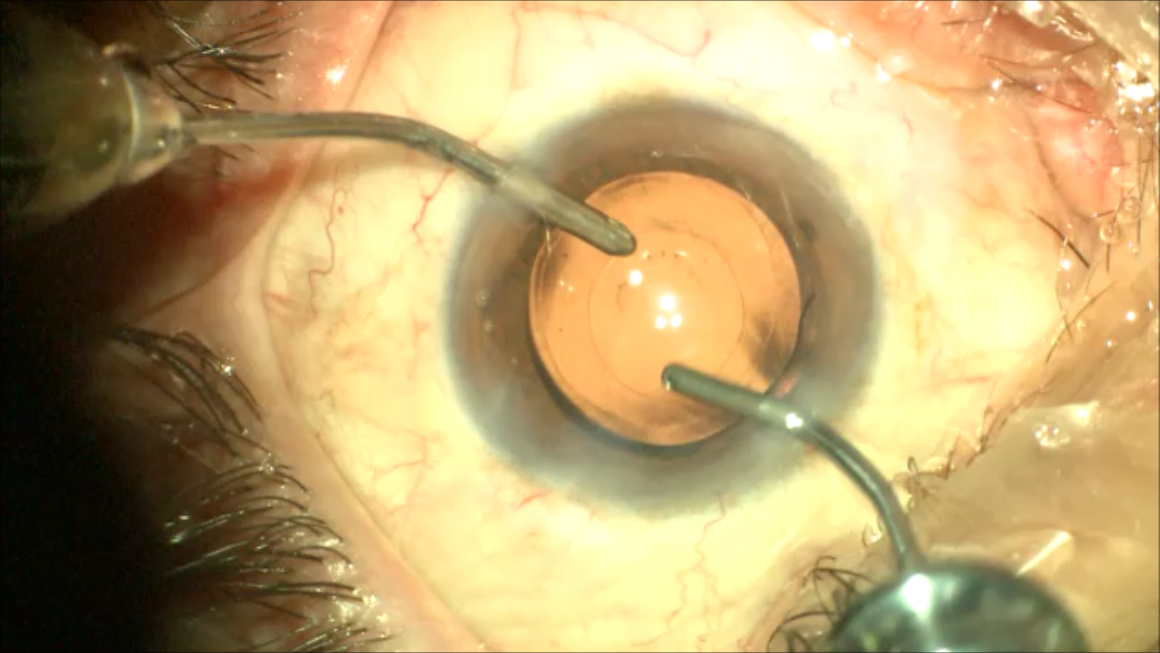
Management transitioned from conservative monitoring to surgery once deviations stabilized. Interventions included bilateral medial rectus recession or unilateral recession-resection.
Postoperatively, all patients achieved orthotropia, resolved diplopia, and restored normal stereopsis. While a temporal association exists between heavy digital use and AACE, causality remains unproven. However, surgical intervention remains highly effective for restoring binocular function. Further research is necessary to clarify the mechanisms behind this "digital-age" presentation of strabismus.
Downloads
References
1. Kim JM, Shin J, Lee YH, Lee YH. Clinical features and change in incidence of acute acquired comitant esotropia: a 15-year single-centre study in South Korea. Eye (Lond). 2024 Jun;38(8):1529-1534. doi: 10.1038/s41433-024-02945-1. Epub 2024 Feb 1. PMID: 38302534; PMCID: PMC11126407.
2. Lekskul A, Chotkajornkiat N, Wuthisiri W, Tangtammaruk P. Acute Acquired Comitant Esotropia: Etiology, Clinical Course, and Management. Clin Ophthalmol. 2021 Apr 15;15:1567-1572. doi: 10.2147/OPTH.S307951. PMID: 33883873; PMCID: PMC8055253.
3. BURIAN HM, MILLER JE. Comitant convergent strabismus with acute onset. Am J Ophthalmol. 1958 Apr;45(4 Pt 2):55-64. doi: 10.1016/0002-9394(58)90223-x. PMID: 13520873.
4. Buch H, Vinding T. Acute acquired comitant esotropia of childhood: a classification based on 48 children. Acta Ophthalmol. 2015 Sep;93(6):568-74. doi: 10.1111/aos.12730. Epub 2015 May 20. PMID: 25989866.
5. Okita Y, Kimura A, Masuda A, Mochizuki Y, Kondo M, Yamadera K, Gomi F. Yearly changes in cases of acute acquired comitant esotropia during a 12-year period. Graefes Arch Clin Exp Ophthalmol. 2023 Sep;261(9):2661-2668. doi: 10.1007/s00417-023-06047-8. Epub 2023 Apr 17. PMID: 37067584; PMCID: PMC10107582.
6. Lee HS, Park SW, Heo H. Acute acquired comitant esotropia related to excessive Smartphone use. BMC Ophthalmol. 2016 Apr 9;16:37. doi: 10.1186/s12886-016-0213-5. PMID: 27061181; PMCID: PMC4826517.
7. Wen W, Farzavandi SK, Sato M, Quah BL, Ko ST, Surendran TS, Wang AG, Hwang JM, Sitorus RS, Dai S, Zhang W, Zhao K, Yam JC, Martin F, Zhao C. Clinical practices on acute acquired comitant esotropia: A consensus statement proposed by the Council of Asia-Pacific Strabismus and Pediatric Ophthalmology Society. Asia Pac J Ophthalmol (Phila). 2025 Jan-Feb;14(1):100134. doi: 10.1016/j.apjo.2025.100134. Epub 2025 Jan 11. PMID: 39805428.
8. Nishikawa N, Sato M. Acute acquired comitant esotropia: Current understanding of its etiological classification and treatment strategies. Taiwan J Ophthalmol. 2024 Jan 11;15(1):79-87. doi: 10.4103/tjo.TJO-D-23-00084. PMID: 40213304; PMCID: PMC11981569.
9. Montriwet M. Possibility of Neurological Diseases Associated with Acute Acquired Comitant Esotropia. Korean J Ophthalmol. 2023 Apr;37(2):120-127. doi: 10.3341/kjo.2022.0112. Epub 2023 Feb 9. PMID: 36758536; PMCID: PMC10151165.
Downloads
Published
How to Cite
Issue
Section
License
Copyright (c) 2026 Georgian Scientists

This work is licensed under a Creative Commons Attribution-NonCommercial-NoDerivatives 4.0 International License.