A Comprehensive Analysis of Quantum Systems and the Significance of Quality Control


Downloads




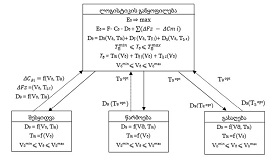
The study of quantum systems represents one of the most important directions in modern Quantum Physics. Based on the principles of quantum mechanics, it is possible to conduct an in-depth investigation of microscopic processes, particle interactions, and quantum states. The detailed analysis of quantum systems relies on the application of fundamental concepts such as the Hamiltonian, wave function, fidelity function, and quantum evolution operators. These methods make it possible to determine the energy states, dynamics, and temporal evolution of a system.
In the detailed analysis of quantum systems, quality control is of particular importance because quantum systems are highly sensitive to external influences and noise. Quality control includes the evaluation of the accuracy, stability, and fidelity of quantum states, which is essential for ensuring the efficiency of quantum operations and the reliable transmission of information.
This paper discusses the main theoretical and practical aspects of quantum system analysis, the role of the Hamiltonian and fidelity function in the evaluation of quantum states, as well as quality control mechanisms.
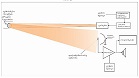
The paper also examines the significance of detailed quantum system analysis and quality control in modern quantum technologies. Special attention is paid to quantum testing and quantum-level scanning devices used for monitoring qubit states, determining energy levels, and optimizing quantum systems. Fundamental principles of quantum physics — superposition, quantum entanglement, and energy discreteness — are also discussed. The paper presents the application of the density matrix, fidelity function, and Hamiltonian in the analysis of quantum states. In addition, spectroscopic methods, sensors based on Josephson Junction technology, and the control problems of multi-qubit systems are examined. Particular attention is devoted to reducing decoherence, noise, and temperature instability. The study demonstrates that quantum testing and scanning systems play a significant role in the development of quantum computers, quantum communication technologies, and advanced sensing systems.
Downloads
Chapeau-Blondeau, François. Quantum Information and Quantum Signal Processing. Springer Nature Switzerland AG; 2026; ISBN-13: 9783032274984;
UAK: 004.38; 530.145
Bergou, János A.; Hillery, Mark; Saffman, Mark.Quantum Information Processing: Theory and Implementation. Springer; 2021/2022; ISBN-13: 9783030754358; ISBN-10: 3030754359; UAK: 004.1 : 530.145
Djordjevic, Ivan B.Quantum Information Processing, Quantum Computing, and Quantum Error Correction: An Engineering Approach. Academic ress; 2021; ISBN-13: 9780128219829; ISBN-10: 0128219823; UAK: 004.38 : 530.145
Cariolaro, Gianfranco. Quantum Communications (Signals and Communication Technology). Springer; 2016; ISBN-13: 9783319343754; ISBN-10: 3319343750; UAK: 621.391 : 530.145
Lecture 4: Purifications and fidelity.
Copyright (c) 2026 Georgian Scientists

This work is licensed under a Creative Commons Attribution-NonCommercial-NoDerivatives 4.0 International License.