Establishing a System of Assessment Parameters for Marketing Department Employees

Downloads




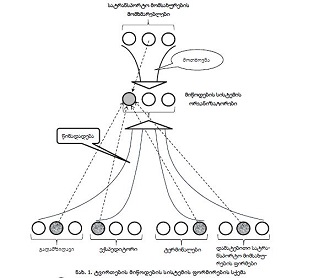
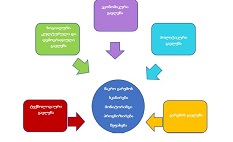
To achieve the goals of the organization, it is extremely important to have personnel with appropriate knowledge, experience and qualifications, since the success of the organization and its competitiveness in the market depend on their work. In order to select candidates and evaluate the work performed by employees, it is necessary to develop a relevant system of assessment parameters. This article discusses the development of a system of parameters important for an employee using the example of a marketing department, which, in turn, will be used as input parameters in an artificial neural network model. To determine the parameter system, at the first stage of the study, an analysis of scientific literature was carried out, as a result of which it was determined that technical and soft skills, as well as personal characteristics, can be taken into account when assessing employees/candidates. At the next stage, using one of the qualitative research methods - a focus group, experts in the field clarified and identified the categories of these skills and the parameters corresponding to each category. In the case of personal characteristics, specific characteristics included in them were named, for which the Big Five model was used. Ultimately, based on the research conducted and the results of the focus group, a fairly extensive list of evaluation parameters for a marketing department employee has been obtained, which combines job-specific sectoral skills, strategic/analytical competencies, leadership and interpersonal skills, as well as decision-making skills, and other categories, with relevant parameters.
Downloads
Costa, P., & McCrae, R. R. (1992). Neo PI-R professional manual. Psychological Assessment Resources.
Fantozzi, I., Martuscelli, L., Di Luozzo, S., & Schiraldi, M. (2024). Soft Skills, Attitudes, and Personality Traits: How Does the Human Factor Matter? A Systematic Review and Taxonomy Proposal through ProKnow-C Methodology. Businesses, 4, 156–176. doi:10.3390/businesses4020011
Gregorio, A. D., Maggioni, I., Mauri, C., & Mazzucchelli, A. (2019). Employability skills for future marketing professionals. European Management Journal, 37(3), 251-258. doi:10.1016/j.emj.2019.03.004
Johnson, D. S., Sihi, D., & Muzellec, L. (2021). Implementing Big Data Analytics in Marketing Departments: Mixing Organic and Administered Approaches to Increase Data-Driven Decision Making. Informatics, 8(4). doi:10.3390/informatics8040066
Kalaignanam, K., Tuli, K. R., Kushwaha, T., Lee, L., & Ga, D. (2020). Marketing Agility: The Concept, Antecedents, and a Research Agenda. Journal of Marketing, 85(1). doi:10.1177/0022242920952760
Kotabe, M. M., & Helsen, K. (2022). Global Marketing Management (9th ed.). JOHN WILEY, [S.l.].
Kovacs, I., & Vamosi Zarandne, K. (2022). Digital marketing employability skillsDigital marketing employability skills in job advertisements – must-have soft skills for entry level workers: A content analysis. Economics and Sociology, 15(1), 178-192. doi:10.14254/2071789X.2022/15-1/11
Madhani, P. M. (2021). Sales and Marketing Integration: Enhancing Customer Value. Marketing Mastermind, 18(3), 21-28. Retrieved from https://ssrn.com/abstract=3932180
Morgan, N. A., & Feng, H. (2024). Marketing capabilities and Shelby D. Hunt: contributions, current state, and the future. Journal of Marketing Management, 40(7), 1224-1244. doi:10.1080/0267257X.2024.2311110
Qiu, J., Boukis, A., & Storey, C. (2022). Internal Marketing: A Systematic Review. Journal of Marketing Theory and Practice, 30(1), 53-67. doi:10.1080/10696679.2021.1886588
Santos, G., Sá, J. C., Félix, M. J., Barreto, L., Carvalho, F., Doiro, M., . . . Stefanović, M. (2021). New Needed Quality Management Skills for Quality Managers 4.0. Sustainability, 13(11). doi:10.3390/su13116149
Shah, D., & Murthi, B. (2021). Marketing in a data-driven digital world: Implications for the role and scope of marketing. Journal of Business Research, 125, 772 - 779. doi:10.1016/j.jbusres.2020.06.062
Stone, M., & Woodcock, N. (2021). Developments in B to B and B to C Marketing and Sales Automation Systems. Journal of Business-to-Business Marketing, 28(2), 203–222. doi:10.1080/1051712X.2021.1920702
Wang, X., Bendle, N., & Pan, Y. (2024). Beyond text: Marketing strategy in a world turned upside down. Journal of the Academy of Marketing Science, 52, 939–954. doi:10.1007/s11747-023-01000-x
Copyright (c) 2026 Georgian Scientists

This work is licensed under a Creative Commons Attribution-NonCommercial-NoDerivatives 4.0 International License.