Ensuring Occupational Safety in the Medical Sector: Key Problems, Systemic Challenges, and Strategic Recommendations

Downloads




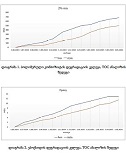
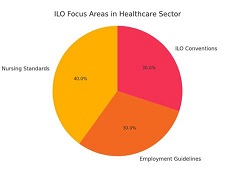
This article provides a detailed overview of the importance of occupational safety in the medical sector, which is one of the most high-risk professional environments. Healthcare workers face daily exposure to a variety of biological, chemical, physical, and psychosocial hazards, making the monitoring of working conditions essential. From 2015 to 2024, the frequency of inspections in Georgia’s medical institutions has been inconsistent, with some years (e.g., 2018–2020) showing no inspections at all. Despite these gaps, recent years demonstrate a clear trend toward increased state monitoring. The peak was reached in 2023 with 47 medical facilities inspected, marking a positive shift in enforcement policy. International conventions and ILO guidelines emphasize that occupational safety is vital not only for individual well-being but also for the overall efficiency and reliability of the healthcare system. Therefore, inspections must be carried out consistently, rigorously, and systematically. Such practices ensure the protection of healthcare workers’ health and lives and contribute to building a safer and more trustworthy medical sector. In conclusion, strengthening labor inspection in healthcare is not just a legal obligation—it is a strategic investment in public health infrastructure.
Downloads
https://www.ilo.org/industries-and-sectors/health-services-sector
https://normlex.ilo.org/dyn/nrmlx_en/f?p=NORMLEXPUB:12100:0::NO::P12100_INSTRUMENT_ID:312294
https://lio.moh.gov.ge/editor/upload/20230425042928-LCID%20Report%20_2015%20-%202017.pdf
https://lio.moh.gov.ge/report/2018.pdf
https://lio.moh.gov.ge/editor/upload/20230425042732-LCID-Report-2019-GEO.pdf
https://lio.moh.gov.ge/report/2020.pdf
https://lio.moh.gov.ge/report/2021.pdf
https://lio.moh.gov.ge/editor/upload/20240606033109-FINAL%20REPORT_2023_GEO.pdf
Copyright (c) 2025 Georgian Scientists

This work is licensed under a Creative Commons Attribution-NonCommercial-NoDerivatives 4.0 International License.