The Role of Supply Chain Management in the Operational Processes of Sports Events


Downloads




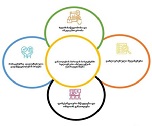
This article examines the role of supply chain management in the operational processes of sports events and analyzes its impact on system coordination, resource allocation, and operational stability. The study focuses on the key elements of the sports event supply chain, including transportation, inventory management, infrastructure provision, information flows, service components, and supplier networks, which together form a complex operational system.
Sports events represent highly complex temporary systems in which numerous participants, service providers, and logistical components are integrated under strict time constraints. In such an environment, the efficient functioning of each element is critically linked to the stability of the overall supply chain. The research is based on a qualitative methodology, including literature review, comparative analysis, conceptual evaluation, and case study interpretation.
The analysis reveals that the supply chain of sports events is characterized by high dynamism and unpredictability, which increases the level of operational risks. The main challenges are related to coordination deficiencies, fragmentation of information flows, uneven resource allocation, and insufficient integration between supply chain components.
The study demonstrates that the successful management of modern sports events largely depends on integrated and technologically supported supply chain systems, which ensure synchronized management of transportation, inventory, infrastructure, and information flows, thereby improving operational coordination and enhancing overall system stability.
Downloads
Tsolakis, N., Bechtsis, D., & Vlachos, D. (2022). Supply chain management in sport events: A systematic literature review. Operations Management Research, 15(3–4), 213–229.
Kim, J., & Kim, M. (2023). Managing logistics disruptions in mega-events. Journal of Business Logistics, 44(2), 189–205.
Bazzanella, F., & Peters, M. (2022). Temporary supply chains in event management. Annals of Tourism Research, 92, 103337.
Hosseini, S., Ivanov, D., & Dolgui, A. (2023). Review of supply chain resilience. International Journal of Production Research, 61(8), 2502–2521.
Queiroz, M. M., & Ivanov, D. (2022). Supply chain viability under pandemic disruptions. Annals of Operations Research, 319, 125–150.
Ben-Daya, M., Hassini, E., & Bahroun, Z. (2023). IoT in supply chain management. International Journal of Production Research, 61(9), 3001–3025.
Dubey, R., Gunasekaran, A., & Bryde, D. (2022). Collaboration in supply chains. Production Planning & Control, 33(8), 700–715.
Preuss, H. (2022). Event sustainability and logistics. Sustainability, 14(5), 2789.
Kache, F., & Seuring, S. (2022). Digital information flows in supply chains. International Journal of Production Economics, 240, 108234.
Dolgui, A., Ivanov, D., & Sokolov, B. (2023). Artificial intelligence in supply chains. European Journal of Operational Research, 304(2), 495–512.
Copyright (c) 2026 Georgian Scientists

This work is licensed under a Creative Commons Attribution-NonCommercial-NoDerivatives 4.0 International License.