Molecular Heterogeneity of Melanocytic Hyperplasias, Melanocytic Moles (nevi), Markers of Recurrence and Progression


Downloads




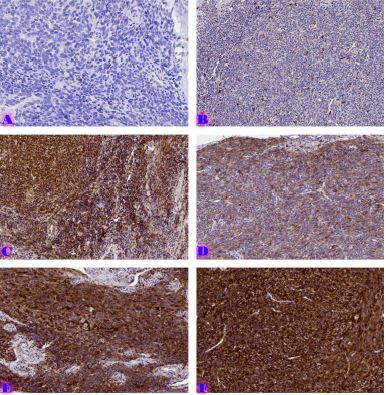
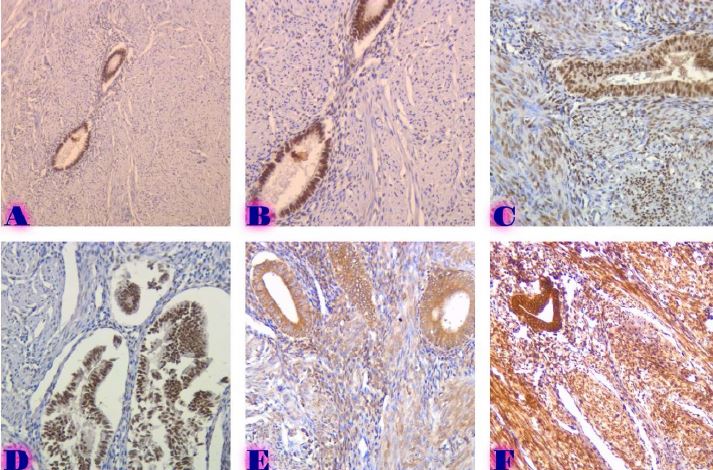
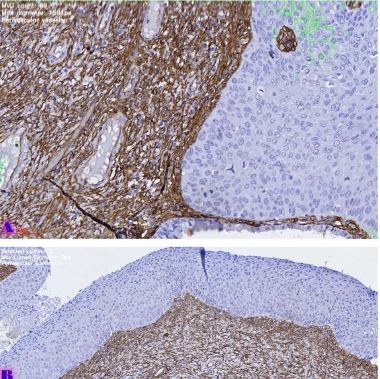
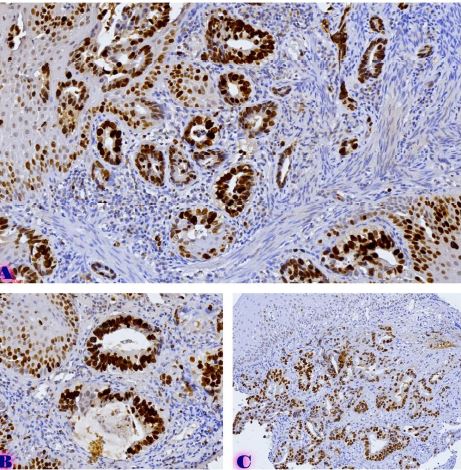
Melanocytic hyperplasias and nevi represent a heterogeneous spectrum of neural crest–derived lesions encompassing benign, atypical, and potentially progressive entities. Their biological behavior is largely determined by cytologic atypia, immunophenotypic variability, and underlying molecular alterations. A subset of nevi may act as precursor lesions in melanoma development, with progression risk influenced by MAPK pathway mutations (BRAF, NRAS) and immune microenvironmental dysregulation. This critical review summarizes the morphologic and immunohistochemical heterogeneity of melanocytic nevi, emphasizing biomarkers associated with recurrence and progression. Our ongoing research focuses on the comparative immunohistochemical profiling of melanocytic hyperplasias and atypical nevi using key markers (Ki-67, P53, BCL-2, SOX10, CD44, FOXP3) to define diagnostic and prognostic patterns. Such integrative analysis aims to refine early diagnostic criteria and improve preventive strategies for melanoma progression.
Downloads
Frantz WT, Iyengar S, Neiswender J, Cousineau A, Maehr R, Ceol CJ. Pigment cell progenitor heterogeneity and reiteration of developmental signaling underlie melanocyte regeneration in zebrafish. Elife. 2023 Apr 6;12.
Yan C, Brunson DC, Tang Q, Do D, Iftimia NA, Moore JC, et al. Visualizing Engrafted Human Cancer and Therapy Responses in Immunodeficient Zebrafish. Cell. 2019 Jun 13;177(7):1903-1914.e14.
Fournier H, Calcagni N, Morice-Picard F, Quintard B. Psychosocial implications of rare genetic skin diseases affecting appearance on daily life experiences, emotional state, self-perception and quality of life in adults: a systematic review. Orphanet J Rare Dis. 2023 Dec 1;18(1).
Neuffer SJ, Cooper CD. Zebrafish Syndromic Albinism Models as Tools for Understanding and Treating Pigment Cell Disease in Humans. Cancers (Basel). 2022 Apr 1;14(7).
Arnold M, Singh D, Laversanne M, Vignat J, Vaccarella S, Meheus F, et al. Global Burden of Cutaneous Melanoma in 2020 and Projections to 2040. JAMA Dermatol. 2022 May 1;158(5):495–503.
Schimmer S, Kerkmann L, Kahlert N, Jubeh S al, Werner T, Corkish C, et al. Dietary lipid overload creates a suppressive environment that impedes the antiviral functions of NK cells. iScience. 2025 May 16;28(5).
Piau O, Brunet-Manquat M, L’Homme B, Petit L, Birebent B, Linard C, et al. Generation of transgene-free hematopoietic stem cells from human induced pluripotent stem cells. Cell Stem Cell. 2023 Dec 7;30(12):1610-1623.e7.
Nam SA, Seo E, Kim JW, Kim HW, Kim HL, Kim K, et al. Graft immaturity and safety concerns in transplanted human kidney organoids. Exp Mol Med. 2019 Nov 1;51(11).
Korsunsky I, Millard N, Fan J, Slowikowski K, Zhang F, Wei K, et al. Fast, sensitive and accurate integration of single-cell data with Harmony. Nat Methods. 2019 Dec 1;16(12):1289–96.
Dong R, Yang R, Zhan Y, Lai HD, Ye CJ, Yao XY, et al. Single-Cell Characterization of Malignant Phenotypes and Developmental Trajectories of Adrenal Neuroblastoma. Cancer Cell. 2020 Nov 9;38(5):716-733.e6.
Joshi A, Basak T, Mondal B. Decoding elegant interplay among different stereo-electronic effects due to the ancient prolyl-4-hydroxylation stabilizing collagenous helicity. iScience. 2025 May 16;28(5).
Lee J, Rabbani CC, Gao H, Steinhart MR, Woodruff BM, Pflum ZE, et al. Hair-bearing human skin generated entirely from pluripotent stem cells. Nature. 2020 Jun 18;582(7812):399–404.
Vandamme N, Berx G. From neural crest cells to melanocytes: cellular plasticity during development and beyond. Cellular and Molecular Life Sciences. 2019 May 30;76(10):1919–34.
Qiu X, Hill A, Packer J, Lin D, Ma YA, Trapnell C. Single-cell mRNA quantification and differential analysis with Census. Nat Methods. 2017 Feb 28;14(3):309–15.
Shih HY, Hsu SY, Ouyang P, Lin SJ, Chou TY, Chiang MC, et al. Bmp5 Regulates Neural Crest Cell Survival and Proliferation via Two Different Signaling Pathways. Stem Cells. 2017 Apr 1;35(4):1003–14.
Belote RL, Le D, Maynard A, Lang UE, Sinclair A, Lohman BK, et al. Human melanocyte development and melanoma dedifferentiation at single-cell resolution. Nat Cell Biol. 2021 Sep 1;23(9):1035–47.
Li H, Hou L. Regulation of melanocyte stem cell behavior by the niche microenvironment. Pigment Cell Melanoma Res. 2018 Sep 1;31(5):556–69.
Wiedemann J, Billi AC, Bocci F, Kashgari G, Xing E, Tsoi LC, et al. Differential cell composition and split epidermal differentiation in human palm, sole, and hip skin. Cell Rep. 2023 Jan 31;42(1).
Hosaka C, Kunisada M, Koyanagi-Aoi M, Masaki T, Takemori C, Taniguchi-Ikeda M, et al. Induced pluripotent stem cell-derived melanocyte precursor cells undergoing differentiation into melanocytes. Pigment Cell Melanoma Res. 2019;32(5):623–33.
Jin S, Guerrero-Juarez CF, Zhang L, Chang I, Ramos R, Kuan CH, et al. Inference and analysis of cell-cell communication using CellChat. Nat Commun. 2021 Dec 1;12(1).
Abdel-Malek ZA, Jordan C, Ho T, Upadhyay PR, Fleischer A, Hamzavi I. The enigma and challenges of vitiligo pathophysiology and treatment. Pigment Cell Melanoma Res. 2020 Nov 1;33(6):778–87.
Pradhan SK, Kumar A, Kumar V. Multi release software reliability modelling incorporating fault generation in detection process and fault dependency with change point in correction process. Sci Rep. 2025 Dec 1;15(1).
Liu LP, Guo NN, Li YM, Zheng YW. Generation of Human iMelanocytes from Induced Pluripotent Stem Cells through a Suspension Culture System. STAR Protoc. 2020 Jun 19;1(1).
Wang S, Drummond ML, Guerrero-Juarez CF, Tarapore E, MacLean AL, Stabell AR, et al. Single cell transcriptomics of human epidermis identifies basal stem cell transition states. Nat Commun. 2020 Dec 1;11(1).
Sharma A, Sances S, Workman MJ, Svendsen CN. Multi-lineage Human iPSC-Derived Platforms for Disease Modeling and Drug Discovery. Cell Stem Cell. 2020 Mar 5;26(3):309–29.
Chen J, Li S, Li C. Mechanisms of melanocyte death in vitiligo. Med Res Rev. 2021 Mar 1;41(2):1138–66.
Sun Q, Lee W, Hu H, Ogawa T, De Leon S, Katehis I, et al. Dedifferentiation maintains melanocyte stem cells in a dynamic niche. Nature. 2023 Apr 27;616(7958):774–82.
Centeno PP, Pavet V, Marais R. The journey from melanocytes to melanoma. Nat Rev Cancer. 2023 Jun 1;23(6):372–90.
Baykal C, Yılmaz Z, Sun GP, Büyükbabani N. The spectrum of benign dermal dendritic melanocytic proliferations. Journal of the European Academy of Dermatology and Venereology. 2019 Jun 1;33(6):1029–41.
D’Mello SAN, Finlay GJ, Baguley BC, Askarian-Amiri ME. Signaling pathways in melanogenesis. Int J Mol Sci. 2016 Jul 15;17(7).
Yang J, Wang Z, Zhou H, Xiong Y, Li Y, Zheng Y wen, et al. Insights into human melanocyte development and characteristics through pluripotent stem cells combined with single-cell sequencing. iScience [Internet]. 2025 May 16 [cited 2025 Oct 28];28(5):112373. Available from: https://www.sciencedirect.com/science/article/pii/S2589004225006340
Bergqvist C, Ezzedine K. Vitiligo: A focus on pathogenesis and its therapeutic implications. Journal of Dermatology. 2021 Mar 1;48(3):252–70.
Montoliu L, Marks MS. A new type of syndromic albinism associated with mutations in AP3D1. Pigment Cell Melanoma Res. 2017 Jan 1;30(1):5–7.
Shain AH, Bastian BC. From melanocytes to melanomas. Nat Rev Cancer. 2016 May 25;16(6):345–58.
Samela T, Malorni W, Matarrese P, Mattia G, Alfani S, Abeni D. Gender differences in vitiligo: psychological symptoms and quality of life assessment description. Front Psychol. 2023;14.
Justice MJ, Dhillon P. Using the mouse to model human disease: Increasing validity and reproducibility. DMM Disease Models and Mechanisms. 2016 Feb 1;9(2):101–3.
Bae JM, Lee SC, Kim TH, Yeom SD, Shin JH, Lee WJ, et al. Factors affecting quality of life in patients with vitiligo: a nationwide study. British Journal of Dermatology. 2018 Jan 1;178(1):238–44.
Copyright (c) 2025 Georgian Scientists

This work is licensed under a Creative Commons Attribution-NonCommercial-NoDerivatives 4.0 International License.