Some Considerations on Universal Research Methods in the Field of Occupational Safety


Downloads




This study underscores the strategic importance of occupational safety research within contemporary organizational frameworks. The principal objective is to establish a methodological architecture capable of systematically assessing risks across diverse professional domains. The author emphasizes that effective risk management is essential not only for personnel protection but also for safeguarding infrastructure and the surrounding environment. The paper provides rigorous definitions and contextual analyses of key terms, including hazard, risk, safety, occupational safety, risk assessment, and risk management. Each concept is examined through both theoretical and applied lenses, thereby laying a robust foundation for subsequent methodological exploration.
The research delineates three primary categories of investigative approaches:
- Quantitative Methods: Encompassing statistical analysis, structured surveys, questionnaires, and environmental monitoring. These techniques facilitate the evaluation of incident frequency, risk prevalence, and the efficacy of safety policies.
- Qualitative Methods: Concentrating on human behavior, organizational culture, and psychosocial dynamics. Methods include in-depth interviews, focus group discussions, observational studies, and case-based analysis.
- Mixed Methods: Integrating quantitative and qualitative paradigms to enhance analytical depth and methodological comprehensiveness.
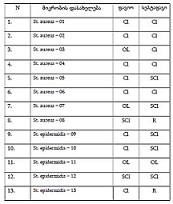
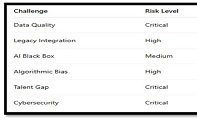
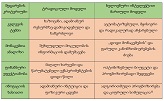
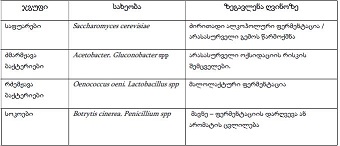
The study accords significant attention to scientific analysis and synthesis as foundational instruments of inquiry. Analytical reasoning enables the decomposition of complex phenomena into constituent elements, while synthesis fosters the integration of empirical findings into coherent theoretical constructs. These processes underpin both the diagnostic and prescriptive dimensions of occupational safety research. Drawing on case studies from healthcare and mining sectors, the paper presents a typology of occupational risks—physical, chemical, biological, psychosocial, ergonomic, and technical. A tabular framework illustrates that, despite sectoral distinctions, these risks exhibit common evaluative characteristics amenable to systematic analysis. Furthermore, the author proposes a functional classification model whereby risks are assessed based on their typological attributes and operational impact. This model serves as a conceptual scaffold for developing a universal framework applicable across multiple domains of human activity.
The study concludes that research methodologies in occupational safety must be inherently flexible, integrative, and context-sensitive. Their judicious application enables effective risk governance, the enhancement of safety standards, and the promotion of organizational resilience.
Downloads
Lanchava O., Ilias N. Critical velocity analysis for safety management in case of tunnel fire. MATEC Web of Conferences 305, 00023, 2020.
Lanchava O., Ilias N. Some issues of thermal calculation of ventilation air for the metro. Journal of Engineering Sciences and Innovation, 2017, 2 (2), 92-105.
Lanchava O., Nozadze G., Bochorishvili N., Lebanidze Z., Arudashvili N., Jangidze M., Tsikarishvili K. Criteria for evaluation of emergency firefighting in transport tunnels. Transport Bridge Europe-Asia, Proceedings of conference, Tbilisi, 2014, 29-35.
Lanchava , Medzmariashvili E., Ilias N., Khitalishvili G., Lebanidze Z. Prospects of usage of transformable systems for extinguishing fire in tunnels. International Scientific Conference “Advanced Lightweight Structures and Reflector Antennas”, Tbilisi, 2009. pp. 301-308.
Lanchava O.A. Hygroscopic heat and mass transfer in underground structures. GTU, 1998, Tbilisi.
Lanchava O.A. Heat and mass exchange in newly driven mine workings. Journal of Mining Science, 1985, 1 (5), 99-104.
Lanchava , Gugeshashvili S. Occupational Health and Safety Risk Management in the Field of Laboratory Medicine. MATEC Web Conf., 389, 00077, 2024.
თ. კუნჭულია, ო. ლანჩავა, მ. ქიტოშვილი. შრომის უსაფრთხოება გეოლოგიური სამუშაოების დროს (სახელმძღვანელო). ტექნიკური უნივერსიტეტი, გვ. 220,
თ. კუნჭულია, ო. ლანჩავა, მ. ქიტოშვილი. შრომის უსაფრთხოება სამთო საწარმოებში (სახელმძღვანელო). ტექნიკური უნივერსიტეტი, გვ. 392, 2024.
Lanchava O., Bulia N., Darakhvelidze M. Ensuring Occupational Safety in the Medical Sector: Key Problems, Systemic Challenges, and Strategic Recommendations. Georgian Scientists, Vol. 7 Issue 2, 2025.
Lanchava O., Ilias N., Nozadze G., Tsanava D. Study of Propagation of Harmful Factors of Fire in Short Road Tunnels with Different Inclinations. MATEC Web of Conferences 342, 03023, 2021.
Lanchava O., Ilias N., Radu S.M., Jangidze M., Khokerashvili Z. Fire development study on physical models of transport tunnels. MATEC Web of Conferences 342, 03020, 2021.
Lanchava O., Abashidze G., Tsverava D. Securing fire safety for underground structures. Quality-Access to Success, 2017, 18.
Lanchava O., Ilias N., Nozadze G., Radu S., Andras I., Moraru Developing of Wi-Fi monitoring control systems for damage factors of fire in road tunnels. The XIth Edition of the Annual Conference “The Academic Days of Technical Sciences Academy of Romania”, 2016.
Lanchava O., Ilias N., Radu S., Javakhishvili G., Makharadze L. Influence of current direction in longitudinal ventilated road tunnels on the backflow of combustion products. MATEC Web of Conferences 373, 00076, 2022.
Lanchava O., Javakhishvili G., Kunchulia T., Khokerashvili Z., Arudashvili N. Aspects of Critical Velocity Variation for Managing Fires and Air Pollution in Road Tunnels. 23rd International Multidisciplinary Scientific Geoconference SGEM 2023, 23(4.1).
Lanchava O., Ilias N., Nozadze G. Some problems for assessment of fire in road tunnels. Supplement of Quality-Access to Success: Bucharest,18, (S1), 2017, pp. 69-72.
Ilias N., Lanchava O., Nozadze G. Numerical modelling of fires in road tunnels with longitudinal ventilation system. Supplement of Quality-Access to Success: Bucharest, 18, (S1), 2017, pp. 85-88.
Lanchava O., Bezhanishvili A., Javakhishvili G., Khokerashvili Z., Arudashvili N. Study of the throttling effect in tunnel fires. Inżynieria Mineralna 1(1), 2024.
Lanchava O., Ratiani N., Khokerashvili Z., Arudashvili N. Variation of Critical Velocity of Downward Ventilation in Inclined Road Tunnels. 24rd International Multidisciplinary Scientific Geoconference SGEM
Lanchava O., Bezhanishvili A., Abshilava A., Ratiani N. On Legislation and Some Aspects of Occupational Safety in GEORGIA. 24rd International Multidisciplinary Scientific Geoconference SGEM 2024.
Lanchava O. Clarification of fire characteristics in a road tunnel based on numerical and laboratory studies. Edelweiss Applied Science and Technology, Learning Gate, 8(6), 2024.
Lanchava O., Ilias N., Radu S., Nozadze G., Tsanava D. Analysis of the use of transformable elements in intelligent tunnel ventilation systems. MATEC Web of Conferences 354, 00020, 2022.
Lanchava O., Ilias N., Radu S., Nozadze G., Jangidze M. Preventing the Spread of Combustible Products in Tunnels by Implementing a Divisible System. Environmental Engineering and Management Journal. 21 (4), 2022, 627-635.
Lanchava O., Nozadze G., Tsanava D. FDS Modeling Results for 50-100 MW Fires in Terms of Semi-Transverse Ventilation in Road Tunnels. Bulletin of the Georgian National Academy of Sciences. 16(4), 2022.
Lanchava O., Ilias N., Radu S., Nozadze G., Javakhishvili G. Dynamics of damaging factors in inclined road tunnels according to the results of numerical modeling of up to 50 MW fires in terms of natural ventilation. MATEC Web of Conferences, 389, 00056, 2024.
Copyright (c) 2025 Georgian Scientists

This work is licensed under a Creative Commons Attribution-NonCommercial-NoDerivatives 4.0 International License.