Integrated Analysis of Ventilation System Efficiency and Lifesaving in Tunnel Fire Conditions

Downloads




This scientific article explores the critical relationship between ventilation system efficiency and human survival during fire incidents in road tunnels. Through the analysis of several historical tunnel fires, the research confirms that ventilation systems, although essential, are not sufficient on their own to guarantee life safety. These findings highlight the need for comprehensive models that integrate various influencing factors.
A new methodological approach is proposed, emphasizing the importance of the Dynamic Efficiency Factor (DEF) — an integrated parameter that evaluates the joint impact of fire dynamics, ventilation efficiency, and human evacuation risks. The DEF concept introduces a holistic framework that links technical performance with human behavioral models in emergency situations.
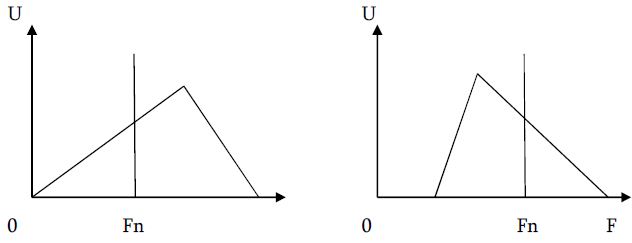
Computational Fluid Dynamics (CFD) simulations are employed to model the development of fires, temperature gradients, smoke propagation, and toxic gas dispersion. The analysis demonstrates that while the Froude number remains a crucial indicator for assessing ventilation performance, in real scenarios it fluctuates significantly. As such, reliance solely on the Froude number without adaptive corrections can lead to insufficient planning for fire emergencies.
One of the key challenges addressed in this study is the integration of CFD models with evacuation simulations. Differences in temporal and spatial resolution between the models complicate the integration process, yet overcoming these difficulties is essential for accurate risk assessment. The paper presents specific practical examples and outlines strategic recommendations for establishing effective, combined modeling methodologies.
Ultimately, the study concludes that achieving a reliable fire safety system requires more than just mechanical installations. It necessitates well-designed procedures, refined engineering approaches, robust management strategies, and close consideration of human factors. By applying such a multifactorial and dynamic framework, emergency planning for tunnel fires can become more resilient and effective, enhancing both structural safety and occupant survival prospects.
Downloads
Bird A., Carvel R. Handbook of Tunnel Fire Safety. Second edition. Thomas Telford Limited, 2012, p. 694.
FIT - Thematic Network FIT ‘Fire in Tunnels’ is supported by the European Community under the fifth Framework Program ‘Competitive and Sustainable Growth’ Contract n° G1RT-CT-2006, p. 76.
UN, Economic and Social Council, Economic Commission for Europe, Report TRANS/AC.7/9, 2001. p.60.
UN, Economic and Social Council, Economic Commission for Europe, Report TRANS/AC.7/9Add 1, 2002. p.2.
UN, Economic and Social Council, Economic Commission for Europe, Report TRANS/AC.7/13, 2003. p.8.
UN, Economic and Social Council, Economic Commission for Europe, Report TRANS/AC.7/15, 2004. p.7.
UN, Economic and Social Council, Economic Commission for Europe, Report TRANS/AC.7/11, 2002. p. 6.
The White Book 2001, Published in April 24, 2001, Sweet & Maxwell Ltd, ISBN 10: 0421745800, ISBN 13:9780421745803.
Haack. A. Fire Protection in Traffic Tunnels: General Aspects and Results of the EUREKA Project, TUNNELING AND UNDERGROUND SPACE TECHNOLOGY, 1998, Volume 13, № 2. pp. 377-381.
Li Y.Z., Vylund L., Ingason H., Appel G. Influence of fire suppression on combustion products in tunnel fires. The work Co-financed by the European Union. Report 2015, p.70.
Lanchava O.A. Heat and mass exchange in permanent mine workings. Journal of Mining Science, 1982, 1 (6), 87-92.
Lanchava O., Ilias N., Andras I, Moraru R., Neag I. On the Ventilation of Transport Tunnels in the Présence of a Strong (Heavy) Fire. Annales of the University of Petrosani, Petrosani (Romania), 2007, Vol. 9 (XXXVI), Part 1, pp. 219-227.
Lanchava O., Ilias N. Critical velocity analysis for safety management in case of tunnel fire. MATEC Web of Conferences 305, 00023, 2020.
Lanchava O., Ilias N. Some issues of thermal calculation of ventilation air for the metro. Journal of Engineering Sciences and Innovation, 2017, 2 (2), 92-105.
Lanchava O., Nozadze G., Bochorishvili N., Lebanidze Z., Arudashvili N., Jangidze M., Tsikarishvili K. Criteria for evaluation of emergency firefighting in transport tunnels. Transport Bridge Europe-Asia, Proceedings of conference, Tbilisi, 2014, 29-35.
Ланчава О.А. , Лебанидзе З.Б. По поводу коллапса системы вентиляции тоннеля при сильном пожаре. Журнал «Транспорт», №3-4 (31-32), Тбилиси , 2008. с. 29-31.
Lanchava O., Medzmariashvili E., Ilias N., Khitalishvili G., Lebanidze Z. Prospects of usage of transformable systems for extinguishing fire in tunnels. International Scientific Conference “Advanced Lightweight Structures and Reflector Antennas”, Tbilisi, 2009. pp. 301-308.
Lanchava O.A. Hygroscopic heat and mass transfer in underground structures. GTU, 1998, Tbilisi.
Lanchava O.A. Heat and mass exchange in newly driven mine workings. Journal of Mining Science, 1985, 1 (5), 99-104.
Lanchava O., Ilias N., Nozadze G., Tsanava D. Study of Propagation of Harmful Factors of Fire in Short Road Tunnels with Different Inclinations. MATEC Web of Conferences 342, 03023, 2021.
Lanchava O., Ilias N. Complex calculation method of temperature, mass transfer potential and relative humidity for ventilation flow in subway. Journal of Engineering Sciences and Innovation, 2018, 3 (1), 69-84.
Vaitkevicius A., Carvel R. Investigating the Throttling Effect in Tunnel Fires. Fire Technology, Vol. 52, 2016, pp. 1619–1628.
Li Y.Z., Ingason H. Discussions on critical velocity and critical Froude number for smoke control in tunnels with longitudinal ventilation. Fire Safety Journal, Vol. 99, 2018, pp. 22-26.
Lanchava O., Ilias N., Radu S.M., Jangidze M., Khokerashvili Z. Fire development study on physical models of transport tunnels. MATEC Web of Conferences 342, 03020, 2021.
Lanchava O., Abashidze G., Tsverava D. Securing fire safety for underground structures. Quality-Access to Success, 2017, 18.
Lanchava O., Ilias N., Nozadze G., Radu S., Andras I., Moraru R. Developing of Wi-Fi monitoring control systems for damage factors of fire in road tunnels. The XIth Edition of the Annual Conference “The Academic Days of Technical Sciences Academy of Romania”, 2016.
Lanchava O., Ilias N., Nozadze G. Some problems for assessment of fire in road tunnels. Supplement of Quality-Access to Success: Bucharest, Vol. 18, (S1), 2017, pp. 69-72.
Ilias N., Lanchava O., Nozadze G. Numerical modelling of fires in road tunnels with longitudinal ventilation system. Supplement of Quality-Access to Success: Bucharest, Vol. 18, (S1), 2017, pp. 85-88.
Li Y.Z., Lei B., Ingason H. Study of critical velocity and backlayering length in longitudinally ventilated tunnel fires. Fire Safety Journal, Vol. 45, 2010, pp. 361-370.
Thomas P.H. The Movement of Smoke in Horizontal Passages against an Air Flow. Fire Research Station. Boreham Wood. 1968.
Lee C.K., Chaiken R.F., Singer J.M., Interaction between duct fires and ventilation flow: an experimental study. COMBUSTION SCIENCE AND TECHNOLOGY. Vol. 20, 1979, pp. 59-72.
Danziger N.H., Kennedy W.D. Longitudinal ventilation analysis for the Glenwood canyon tunnels. Fourth International Symposium on the Aerodynamics & Ventilation of Vehicle Tunnels, BHRA Fluid Engineering. 1982.
Kennedy W.D. Critical velocity: past, present and future. Seminar of Smoke and Critical Velocity in Tunnels, JFL Lowndes, 1996, pp. 305–322.
Lanchava O., Javakhishvili G. Impact of strong fires on a road tunnel ventilation system. Bulletin of the Georgian National Academy of Sciences. 15(4), 2021.
Lanchava O., Ilias N., Radu S., Nozadze G., Tsanava D. Analysis of the use of transformable elements in intelligent tunnel ventilation systems. MATEC Web of Conferences 354, 00020, 2022.
Lanchava O., Ilias N., Radu S., Nozadze G., Jangidze M. Preventing the Spread of Combustible Products in Tunnels by Implementing a Divisible System. Environmental Engineering and Management Journal. 21 (4), 2022, 627-635.
Lanchava O., Ilias N., Radu S., Javakhishvili G., Makharadze L. Influence of current direction in longitudinal ventilated road tunnels on the backflow of combustion products. MATEC Web of Conferences 373, 00076, 2022.
Lanchava O., Nozadze G., Tsanava D. FDS Modeling Results for 50-100 MW Fires in Terms of Semi-Transverse Ventilation in Road Tunnels. Bulletin of the Georgian National Academy of Sciences. 16(4), 2022.
Lanchava O., Javakhishvili G., Kunchulia T., Khokerashvili Z., Arudashvili N. Aspects of Critical Velocity Variation for Managing Fires and Air Pollution in Road Tunnels. 23rd International Multidisciplinary Scientific Geoconference SGEM 2023, 23(4.1).
Lanchava O., Ilias N., Radu S., Nozadze G., Javakhishvili G. Dynamics of damaging factors in inclined road tunnels according to the results of numerical modeling of up to 50 MW fires in terms of natural ventilation. MATEC Web of Conferences, 389, 00056, 2024.
Lanchava O., Bezhanishvili A., Javakhishvili G., Khokerashvili Z., Arudashvili N. Study of the throttling effect in tunnel fires. Inżynieria Mineralna 1(1), 2024.
Lanchava O., Ratiani N., Khokerashvili Z., Arudashvili N. Variation of Critical Velocity of Downward Ventilation in Inclined Road Tunnels. 24rd International Multidisciplinary Scientific Geoconference SGEM 2024.
Lanchava O., Bezhanishvili A., Abshilava A., Ratiani N. On Legislation and Some Aspects of Occupational Safety in GEORGIA. 24rd International Multidisciplinary Scientific Geoconference SGEM 2024.
Lanchava O. Clarification of fire characteristics in a road tunnel based on numerical and laboratory studies. Edelweiss Applied Science and Technology, Learning Gate, 8(6), 2024.
Copyright (c) 2025 Georgian Scientists

This work is licensed under a Creative Commons Attribution-NonCommercial-NoDerivatives 4.0 International License.