Psychoanalysis of Corruption
(Education System)


Downloads




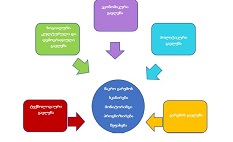
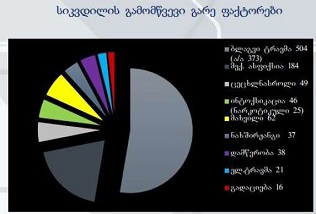
Corruption is fueled by the most fundamental principle of living nature - “getting more with less effort”. This principle is applied moderately with animals, while with humans it is easily overdone, which takes the form of a crime. Such activities require control even in educational institutions, where autonomy operates and the degree of freedom of their activities is increased. The situation can be corrected by establishing controlled autonomy so that autonomy is not used for corrupt purposes. The following forms of corruption are worth noting: 1) discriminatory corruption, which is manifested in the dismissal of academic staff aged 65+. Universities suffer great damage due to the loss of valuable experience due to the dismissal of these staff; 2) competitive corruption, when experienced academic staff are left without a job as a result of biased competitions and their salaries are used for personal interests; 3) Contractual corruption, when a fixed-term employment contract is fraudulently concluded with academic staff and after the expiration of this term they are dismissed from their jobs as strangers, despite the deterioration of their situation. All three of these forms of corruption in higher education institutions should be prohibited due to their criminal nature (embezzlement of staff salaries), promotion of the moral degradation of staff, and the characteristic of sharply worsening the rating and other indicators (including finances) of the higher education institution.
Downloads
Freud Sigmund (1923). Introductory lectures on psycho-analyses (J. Riviera, Trans.). London,
Allend & Unwin.
James W. (1950). The principles of psychology (2 vols.), New York: Holt, Renehart & Wilson.
Goroshidze, G. (2023). Formation of moral climate as a superstrategy of personnel management (in
the education system). Peer-reviewed, impact factor, international electronic scientific journal, No. 3
(68), p. 94-105. (In Georgian).
Goroshidze G. . Correction of Academic Personnel Management Defficiencies in the Higher Education System. Peer-reviewed, impact factor, international electronic scientific journal, 2024 | No. 1 (70), p. 64-72. (In Georgian).
Goroshidze G., Lasha Mgeladze (2023),"Academic corruption" – remuneration Contests and
evaluation system. The New Economist, international refereed and peer-reviewed scientific journal,
identifiable in Google Scholar and Research Gates databases, N3 (70), Vol. 18, ex. 3, p. 29-44. (In
Georgian).
Goroshidze G. (2022) Moral leadership - effective organization. Educational sciences and
psychology. Peer-reviewed, impact factor, international electronic scientific journal, | No. 3 (64),
p. 96-104 (In Georgian).
Mgeladze, L. (2017). The Challenges Georgia Faces in The Fight Against Corruption, Journal
Business- Engineering, 2017, #4, pp. 20-25 (In Georgian).
Goroshidze G. (2023). Great advantages of a lifetime employment contract in the higher education
system. Peer-reviewed, impact factor, international electronic scientific journal, 2023 | No. 4 (69),
p. 21-32. (In Georgian).
Goroshidze G. (2023). Inadmissibility of fixed-term employment contracts causing corruption
in the higher education system. "Georgian Scientists", Association for Science, scientific electronic
journal, Vol. 5, No. 4, p. 402-416. https://doi.org/10.52340/gs.2023.05.04.37 (In Georgian).
Organic law of Georgia, Labor Code of Georgia (2010). Georgia, Tbilisi (in Georgian).
Georgian Law About higher education (2004). Georgia, Tbilisi (in Georgian).
Descartes Rene (2006). A Discourse on the Method. Translated by Ian Maclean. Oxford University
Press.
Copyright (c) 2025 Georgian Scientists

This work is licensed under a Creative Commons Attribution-NonCommercial-NoDerivatives 4.0 International License.