Analysis of Fire Development of Different Intensity in a Road Tunnel Using Numerical Simulation


Downloads




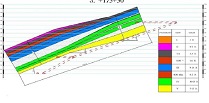
It is known that in road tunnels equipped with longitudinal ventilation system, backlayering frequently occurs during the initiation and development of fires. This means that the ventilation airflow does not exert sufficient impact on the buoyant forces generated by the fire. As a result, a tunnel is intensively filled with smoke and other toxic combustion products, creating an environment incompatible with human survival and hazardous for human life. An organized and immediate self-evacuation is considered to be the only effective means to rescue people under such conditions. The time period for an effective self-evacuation is significantly dependent on the fire development in enclosed spaces, and the propagation dynamics of dangerous factors. In order to determine this, we have conducted a numerical modeling of 10, 30, 50 MW heat release intensity fire within the FDS program. The Finite Volume Method was applied. A 500-m-long tunnel was selected, with the cross-sectional area of 40-42 m2. The minimum size of the finite volume outline - 0,25X0,25X0,25 m, maximum - 0,5 X 0,5 X 0,5 m, modeling duration – 190 sec., the fire source, with an area of 10–15 m², is located at the center of the tunnel. The modeling was carried out using four types of fuel: petrol, diesel, kerosene, and log wood. The thesis underlines that the dynamic pressure induced by a severe fire significantly exceeds the static pressure of the tunnel jet fans. Hence, after the algebraic summation of the positively directed ventilation flows and the negatively directed flows caused by the fire, intense backlayering occurs, which must be taken into account when implementing emergency ventilation projects. The numerical modeling revealed the dynamics of the spread of hazardous factors features, which significantly impact the evacuation duration and the structural stability of tunnels.
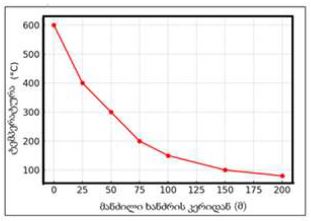
The dynamics of the spread of the critical temperature of 60°C, as one of the hazardous factors, were determined, along with its geometric parameters of propagation in fires of corresponding intensity. Additionally, the propagation dynamics of carbon monoxide at a hazardous concentration of 200 mg/m³ in the tunnel’s vertical plane were established for fires of appropriate intensity. The obtained results are instrumental in formulating ventilation strategies and emergency management protocols in operational tunnels when fires occur, serving as essential guidance for both personnel and rescue teams.
Downloads
O. Lanchava, N. Ilias, M. Jangidze, Z. Khokerashvili, S. M. Radu. Fire Development Study on Physical Models of Transport Tunnels. MATEC Web of Conferences 342, 03020 (2021) Petrosani, Romania, 2021. https://doi.org/10.1051/mat ecconf/202134203020
O. Lanchava, L. Makharadze, G. Nozadze, M. Jangidze, G. Javakhishvili, T. Kunchulia, Z. Khokerashvili, N. Arudashvili, D. Tsanava, S. Sebiskveradze. Saving lives in a road tunnel using transformable elements restricting the propagation of fire products. Georgian Scientists, 2022-03-02. https://journals.4science.ge/i ndex.php/GS/article/view/7 47
O. Lanchava, N. Ratiani, Z. Khokerashvili, N. Arudashvili. Variation of Critical Velocity of Downward Ventilation in Inclined Road Tunnels. International Multidisciplinary Scientific GeoConference Surveying Geology and Mining Ecology Management, SGEM 2024. 10.5593/sgem2024/4.1/s19.
O. Lanchava, N. Ilias. Critical velocity analysis for safety management in case of tunnel fire. MATEC Web of Conferences 305, 00023, 2020.
O. Lanchava, N. Ilias. Some issues of thermal calculation of ventilation air for the metro. Journal of Engineering Sciences and Innovation 2(2), 2017.
Z. Khokerashvili. Analysis of Fire Development in a Road Tunnel Equipped with Transformable Elements by Using Numerical Modeling Method. 13 Annual International Meeting of the Georgian Mechanical Union. Batumi State Maritime Academy, Batumi, Georgia. August 24-26, 2022.
O. Lanchava, A. Bezhanishvili, G. Javakhishvili, Z. Khokerashvili, N. Arudashvili. Study of the Throttling Effect in Tunnel Fire. Inżynieria Mineralna, Vol. 1, no. 1, 2024, 385—393.
DOI 10.29227/IM-2024-01-44
O. Lanchava, G. Nozadze, N. Arudashvili, Z. Khokerashvili. To Determination of Ventilation Air of The Metro of Tbilisi by Thermal Factor. Georgian Scientists, Volume 3, Issue 1, 2021/6/10. https://doi.org/10.52340/gs.02.21.283
O Lanchava, G Nozadze, Z Khokerashvili, Numerical modeling of ventilation flow distribution is subway tunnels with considering of the piston effect. Georgian Scientists, Vol. 3 No. 1 (2021), https://doi.org/10.52340/gs.02.21.283
Copyright (c) 2025 Georgian Scientists

This work is licensed under a Creative Commons Attribution-NonCommercial-NoDerivatives 4.0 International License.