Consequences of Social Isolation on Behavior and Hypothalamic Monoaminergic Transmission in Adult Rats of Different Social Statuses

Downloads




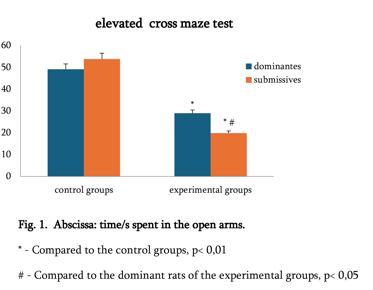
In recent years, social isolation stress of humans and its importance in the development of behavioral disorders of psychiactic nature has become mostly current. Experimental studies using animal models have demonstrated that social stress can induce depressive- and anxiety-like behaviors, as well as neuroendocrine and physiological dysregulation. Stress-related influences are known to alter central neurotransmitter systems, particularly those involved in monoaminergic transmission. Studies have shown that intracerebral neurotransmission dysfunction such as serotonine, norepinephrine and dopamine play an important role in the development of anxiety and depression. The impact of stress varies based on individual neurophysiological characteristics, including social status. The aim of this study was to investigate the effects of stress induced by social isolation on behavior and hypothalamic monoaminergic transmission in rats of different social statuses. Experiments were performed on groups of white male laboratory rats. Dominant and submissive individuals in groups were identified using two methods based on competition for food and water. Social isolation of dominant and submissive rats was carried out for 14 days in small individual cages. Depressive and anxiety-like behaviors were evaluated using the “forced swim” and “elevated cross maze” tests. According to behavioral tests, following social isolation, both dominant and submissive rats exhibited anxiety-like behaviors. In response to isolation, an increase in dopamine concentrations was observed in the hypothalamus of rats. Norepinephrine levels were significantly elevated only in dominant rats, who exhibited lower levels of anxiety compared to their submissive counterparts. Thus, a 14-day social isolation elicits anxiety-like behavior in both dominant and submissive individuals, which is associated with alterations in hypothalamic monoaminergic signaling, notably characterized by elevated dopamine and norepinephrine levels. These findings suggest that the observed increases in hypothalamic monoamine concentrations reflect compensatory and adaptive neurochemical responses aimed at mitigating the adverse effects of prolonged stress exposure and preventing the development of stress-related pathologies. According to the results, submissive individuals exhibit significantly greater sensitivity to social isolation stress than their dominant counterparts. These findings highlight the importance of considering individual social profiles in future research on stress adaptive mechanisms and stress-induced psychopathologies.
Downloads
Brandt L, Liu S, Heim C, Heinz A. “The effects of social isolation stress and discrimination on mental health”. Transl Psychiatry, 2022 Sep 21;12(1):398.
Henssler J, Stock F, van Bohemen J, Walter H, Heinz A, Brandt L. “Mental health effects of infection containment strategies: Quarantine and isolation—a systematic review and meta-analysis”. Eur Arch Psychiatry Clin Neurosci., 2021; 271:223–34.
McNeal N, Anderson EM, Moenk D, Trahanas D, Matuszewich L, Grippo AJ. “Social isolation alters central nervous system monoamine content in prairie voles following acute restraint”. Soc Neurosci., 2018 Apr;13(2):173-183.
Loades ME, Chatburn E, Higson-Sweeney N, Reynolds S, Shafran R, Brigden A, Linney C, McManus MN, Borwick C, Crawley E. “Rapid Systematic Review: The Impact of Social Isolation and Loneliness on the Mental Health of Children and Adolescents in the Context of COVID-19”. J Am Acad Child Adolesc Psychiatry, 2020 Nov;59(11):1218 1239; e3.
Begni V, Sanson A, Pfeiffer N, Brandwein C, Inta D, Talbot Sr, Riva MA, Gass P, Mallien AS. “Social isolation in rats: Effects on animal wefare and molecular markers for neuroplastisity “. PLoS One, 2020Oct 27;15(10); e 0240439.
McKittrick CR, Blanchard DC, Hardy MP, & Blanchard RJ (2009).” Social stress effects on hormones, brain, and behavior “. Hormones, Brain and Behavior, 2010,1:735-772.
Liu Y, Zhao J, Guo W. “Emotional Roles of Mono-Aminergic Neurotransmitters in Major Depressive Disorder and Anxiety Disorders”. Front Psychol, 2018 Nov 21; 9:2201.
Mumtaz F, Khan, M.I., Zubair M, Dehpour, A.R. “Neurobiology and consequences of social isolation stress in animal model—A comprehensive review”. Biomed Pharmacother., 2018 Sep: 105:1205-1222.
Umriukhin AE, Wigger A, Singewald N, Landgraf R. “Hypothalamic and hippocampal release of serotonin in rats bred for hyper- or hypo-anxiety”. Stress, 2002 Dec;5(4):299-305.
Matitaishvili T, Domianidze T, Emukhvari N, Khananashvili M. “Behavioral Characteristics of Rats on Various Hierarchical Level”. Georgian Medical News, 2016, N 3, 63–73.
Matitaishvili T, Domianidze T, Kozmava K. “Social stress causes depressive-like behavior in submissive rats”. Journal of Biological Physics and Chemistry, 2023 (23), 53-56.
McEwen, B.S., McKittrick, C.R., Tamashiro K.L., Sakai, R.R. “The brain on stress: Insight from studies using the Visible Burrow System”. Physiology & Behavior, 2015(146), 47-56.
Malatynska E, Rapp R, Harrawood D, Tunnicliff G. “Submissive behavior in mice as a test for antidepressant drug activity”. Pharmacol Biochem Behav., 2005 Oct;82(2):306-13.
Nesher E, Gross M, Lisson S, Tikhonov T, Yadid G, Pinhasov A. “Differential responses to distinct psychotropic agents of selectively bred dominant and submissive animals”. Behav Brain Res., 2013 Jan 1;236(1):225-235.
Slattery D. A., and Cryan J. F. “Using the forced swim test to assess antidepressant-like activity in rodents”. Nat. Protoc., 2012, 7, 1009–1014.
Yankelevitch Yahav R, Franko M, Huly A, Doron R. “The Forced Swim Test as a Model of Depressive-like Behavior”. Journal of Vis Exp., 2015 Mar 2;(97):52587.
Carobrez A. P., and Bertoglio L. J. “Ethological and temporal analyses of anxiety-like behavior: the elevated plus-maze model 20 years on”. Neurosci. Biobehav. Rev., 2005, 29, 1193–1205.7.
Arantes R, Tejada J, Bosco G.G, Morato S, Roque A. C. „Mathematical methods to model rodent behavior in the elevated plus-maze”. J. Neurosci. Methods, 2013, 220, 141–148.
Villada C, Hidalgo V, Almela M, Salvador A. “Individual Differences in the Psychobiological Response to Psychosocial Stress (Trier Social Stress Test): The Relevance of Trait Anxiety and Coping Styles”. Stress Health, 2016 Apr;32(2):90-9.
Ebner K, Singewald N. “Individual differences in stress susceptibility and stress inhibitory mechanisms”. Current Opinion in Behavioral Sciences, 2017 Apr, Volume 14, 54-64.
Wood CS, Valentino RJ, Wood SK. “Individual differences in the locus coeruleus norepinephrine system: Relevance to stress-induced cardiovascular vulnerability”. Physiol Behav., 2017 Apr 1:172:40-48.
Haller J, Kruk MR. “Normal and abnormal aggression: human disorders and novel laboratory models”. Neurosci Biobehav Rev., 2006;30(3):292-303.
Stein D.J. and Stahl S. “Serotonin and anxiety: current models”. International Clinical Psychopharmacology, 2000, 15, S1–6.
McKittrick C.R. and McEwen B.S. “Regulation of serotonergic function in the CNS by steroid hormones and stress”. In: Stone, T.W., eds, CNS Neurotransmitters and Neuromodulators (CRC Press, Boca Raton, Florida) 1996, 4, 37–76.
Barr JL, Foster GL. “Serotonergic neurotransmission in the ventral hippocampus is enhanced by corticosterone and altered by chronic amphetamine treatment”. Neuroscience, 2011 May, 19:182:105-14.
Harvey BH, Brand L, Jeeva Z, Stein DJ. “Cortical/hippocampal monoamines, HPA-axis changes and aversive behavior following stress and restress in an animal model of post-traumatic stress disorder”. Physiol Behav., 2006 May 30;87(5):881-90.
Lapiz-Bluhm MD. “Impact of stress on prefrontal glutamatergic, monoaminergic and cannabinoid systems”. Curr Top Behav Neurosci., 2014,18:45-66.
Copyright (c) 2025 Georgian Scientists

This work is licensed under a Creative Commons Attribution-NonCommercial-NoDerivatives 4.0 International License.