A Comparative Analysis of Competition Policy in Science Commercialisation
Science for society, or just for business?


Downloads




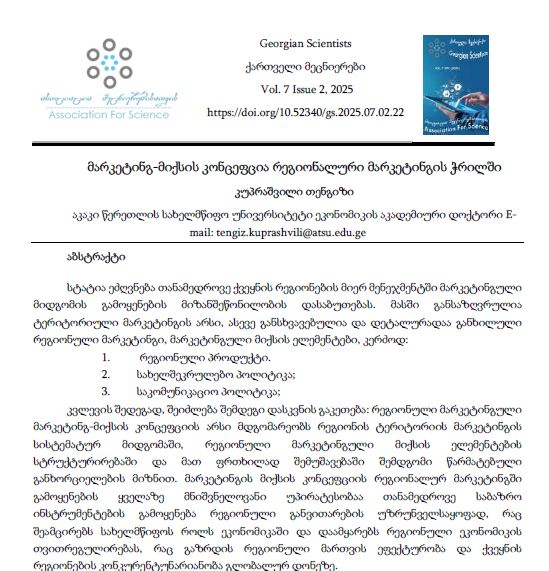
Science commercialisation serves as a fundamental process to convert research discoveries into marketable products, which drive economic development and solve social requirements. Science commercialisation maintains a sophisticated relationship with competition policy. This research examines how competition policy creates conditions that support science commercialisation while maintaining fair access to benefits for all. The analysis examines three significant challenges, which include research monopolisation, high barriers to entry for new innovators and ethical concerns about privatising public knowledge. The research evaluates worldwide best practices by studying the Bayh-Dole Act in the United States and the Horizon 2020 programme of the European Union to determine their impact on outcomes. Moreover, the paper addresses the gap by examining how competition policy mechanisms can balance innovation incentives with broad access, using case studies and policy analysis, and this analysis leads to policy recommendations that support innovation-friendly competition.
Downloads
Aghion, P., Bloom, N., Blundell, R., Griffith, R., Howitt, P. (2005). Competition and innovation: An inverted-U relationship. The Quarterly Journal of Economics, 120(2), 701–728.
Arrow, K. J. (1962). Economic welfare and the allocation of resources for invention. In R. R. Nelson (Ed.), The rate and direction of inventive activity: Economic and social factors (pp. 609–625). Princeton University Press.
Baker, J. B. (2007). Beyond Schumpeter vs. Arrow: Antitrust fosters innovation. Antitrust Law Journal, 74(3), 575–602.
Brookes, G., & Barfoot, P. (2020). GM crops: Global socio-economic and environmental impacts 1996–2018 (2nd ed.). PG Economics Ltd.
Bulut, H., & Moschini, G. (2009). US universities’ net returns from patenting and licensing: A quantile regression analysis. Economics of Innovation and New Technology, 18(2), 123–137.
Cunningham, C., Ederer, F., & Ma, S. (2021). Killer acquisitions. Journal of Political Economy, 129(3), 649–702.
DiMasi, J. A., Grabowski, H. G., & Hansen, R. W. (2016). Innovation in the pharmaceutical industry: New estimates of R&D costs. Journal of Health Economics, 47, 20–33.
Florio, M., & Gamba, S. (2021). Biomed Europa: After the coronavirus, a public infrastructure to overcome the pharmaceutical oligopoly. Annals of Public and Cooperative Economics, 92(2), 165–185.
Fonseca, L., & Maguire, R. (2024). The good, the smart, and the innovative: Governance and implementation of Smart Specialisation Strategies in 2021–27. IQ-Net Thematic Paper 57(2), European Policies Research Centre Delft.
Katterbauer, K., and Cleenewerck, D. (2024). AI governance and sustainable innovation: A Middle East perspective. Springer.
Laplane, A., & Mazzucato, M. (2020). Socialising the risks and rewards of public investments: Economic, policy, and legal issues. Research Policy, 49, 103985.
Lerner, J. (2002). When bureaucrats meet entrepreneurs: The design of effective “public venture capital” programmes. The Economic Journal, 112(477), F73–F84.
MarketsandMarkets. (2023). AI in drug discovery market by technology, application, and region - Global forecast to 2028. https://www.marketsandmarkets.com
Mazzucato, M. (2018). Mission-oriented innovation policies: Challenges and opportunities. Industrial and Corporate Change, 27(5), 803–815.
Mowery, D. C., Nelson, R. R., Sampat, B. N., & Ziedonis, A. A. (2004). Ivory tower and industrial innovation: University–industry technology transfer before and after the Bayh–Dole Act. Stanford University Press.
Nelson, R. R. (2001). Observations on the post-Bayh-Dole rise of patenting at American universities. Journal of Technology Transfer, 26(1–2), 13–19.
OECD. (2023). Main science and technology indicators. OECD Publishing.
Panagopoulos, C., & Sideri, M. (2021). Prospect patents and CRISPR: Rivalry and ethical licensing in a semi-commons environment. Journal of Law and the Biosciences. 2021, 8:031.
Petrova, E. (2013). Innovation in the pharmaceutical industry: The process of drug discovery and development. In M. Ding (Ed.), Innovation and marketing in the pharmaceutical industry (pp. 19-81). Springer. https://doi.org/10.1007/978-1-4614-7801-0_2
Qian, X. (2025). Governing China's digital transformation: Industrial policy, regulatory governance, and innovation. Routledge.
Rimmer, M. (2022). The People's Vaccine: Intellectual Property, Access to Essential Medicines, and COVID-19. The Journal of Intellectual Property Studies. 2022, V:1-71.
Shapiro, C. (2011). Competition and innovation: Did Arrow hit the bull’s eye? In J. Lerner and S. Stern (Eds.), The rate and direction of inventive activity revisited (pp. 361–404). University of Chicago Press.
State Council of the People’s Republic of China. (2017). A next-generation artificial intelligence development plan (English translation).
Todorova, E. (2021). Schumpeter, innovation, and competition policy: Lessons for the digital economy. Technology and Innovation, 22(3).
UNCTAD. (2021). Technology and innovation report: Catching technological waves – Innovation with equity. United Nations Conference on Trade and Development.
UNESCO. (2021). Science report: The race against time for smarter development. United Nations Educational, Scientific and Cultural Organisation.
WHO. (2021). WHO COVID-19 Technology Access Pool (C-TAP). World Health Organisation.
WIPO. (2022). Gene editing and intellectual property: A global perspective. World Intellectual Property Organisation.
Wouters, O. J., Shadlen, K. C., Salcher-Konrad, M., Pollard, A. J., Larson, H. J., Teerawattananon, Y., and Jit, M. (2021). Challenges in ensuring global access to COVID-19 vaccines: Production, affordability, allocation, and deployment. The Lancet, 397(10278), 1023–1034.
Zuo, Z. (2023). China's data strategies: Institutionalisation, activation and layering. In Global data strategies (pp. 119–160). Beck/Hart.
World Intellectual Property Organisation. (2019). WIPO technology trends 2019: Artificial intelligence. WIPO
Fox-Penner, P. (2022). The key to electric grid reliability: Modernising governance. Kleinman Centre for Energy Policy, University of Pennsylvania.
Association of American Universities. (n.d.). Preserve the Bayh-Dole Act and university technology transfer. Retrieved from https://www.aau.edu/key-issues/preserve-bayh-dole-act-and-university-technology-transfer
Pressman, L., Planting, M., Moylan, C., & Bond, J. (2022). Economic contributions of university/nonprofit inventions in the United States: 1996–2020 [Report]. Biotechnology Innovation Organisation (BIO) & AUTM. https://autm.net/AUTM/media/About-Tech-Transfer/Documents/BIO-AUTM-Economic-Contributions-of-University-Nonprofit-Inventions_14JUN2022.pdf
Copyright (c) 2025 Georgian Scientists

This work is licensed under a Creative Commons Attribution-NonCommercial-NoDerivatives 4.0 International License.