A Lightweight and Optimized BERT-based Intrusion Detection System for Resource-Constrained Network and Logistics Environments

Downloads




This paper proposes OB-IDS (Optimized BERT-based Intrusion Detection System), a highly efficient and lightweight intrusion detection model specifically designed for resource-constrained environments such as edge devices, IoT gateways, and embedded network appliances.
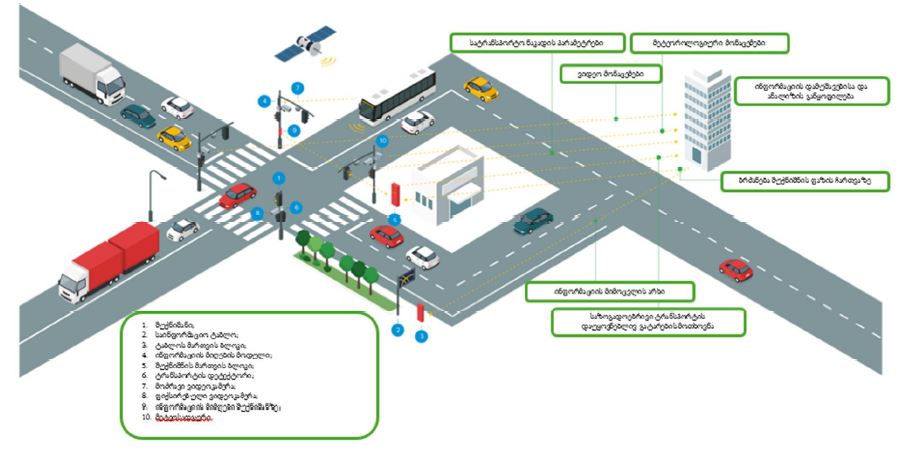
Modern logistics and supply chain infrastructures increasingly rely on interconnected cyber-physical systems, including warehouse management systems (WMS), transportation management systems (TMS), automated sorting machines, RFID/IoT tracking devices, and cloud-integrated fleet monitoring platforms. These systems generate continuous real-time data flows and operate in highly distributed, resource-constrained environments — making them vulnerable to cyber intrusions, manipulation attacks, GPS spoofing, and data-tampering threats.
By applying a multi-stage optimization pipeline that combines model quantization, structured pruning, knowledge distillation, and self-distillation, the original BERT-based intrusion detection model is dramatically compressed while preserving detection performance. The optimized model was comprehensively evaluated on two benchmark datasets: UNSW-NB15 and CIC-IDS2017. Experimental results show that OB-IDS reduces inference time by up to 87.3% and model size/memory footprint by up to 92.6% compared to the full BERT baseline, while maintaining accuracy above 98.1% on both datasets. These findings demonstrate that Transformer-based IDSs can be successfully deployed in real-time threat detection scenarios under severe computational and memory constraints.
Downloads
Jiao, L., Yin, Y., Shang, L., Jiang, X., Chen, X., Li, L., ... & Liu, Q. (2020). TinyBERT: Distilling BERT for Natural Language Understanding. In Proceedings of the 2020 Conference on Empirical Methods in Natural Language Processing (EMNLP).
Lin, Z., Huang, H., Wang, C., & Zhang, J. (2022). BERT-IDS: An Intrusion Detection System Based on BERT. Communications in Computer and Information Science, 154-168.
Doborjginidze, G., and Petriashvili, L. (2020). “Improving Efficiency of Inventory Identification System.” European Science Review (1-2) 84-88, doi: https://doi.org/10.29013/ESR-20-1.2-84-88.
Doborjginidze, G., Petriashvili, L., and Inaishvili, M. (2020). “Improve Efficiency And Reliability of Supply Chains Using Smart Contracts.” International Academy Journal Web of Scholar https://doi.org/10.31435/rsglobal_wos/30122020/7261
Nobach, K., & Petriashvili, L. (2025). Impact of Artificial Intelligence on Management Control Processes. Engineering Innovations, 15, 53–64. https://doi.org/10.4028/p-jcv2a8
Petriashvili, L. ., Kaishauri, T. ., & Otkhozoria, N. . (2024). Artificial Intelligence for Decision Making in the Supply Chain. Journal of Technical Science and Technologies, 8(1), 30–34. https://doi.org/10.31578/jtst.v8i1.152
Petriashvili, L., & Khomeriki, I. (2024). The Impact of Artificial Intelligence in the business process in the Phase of Data Analytics Georgian Technical University. GEORGIAN SCIENTISTS, 6(1). https://doi.org/10.52340/gs.2024.06.01.07
Nobach, K., & Petriashvili, L. (2025). Impact of artificial intelligence on management control processes. Engineering Innovations. https://doi.org/10.4028/p-Jcv2A8
Doborjginidze, G., Petriashvili, L., and Inaishvili, M. (2020). “Improve Efficiency And Reliability of Supply Chains Using Smart Contracts.” International Academy Journal Web of Scholar https://doi.org/10.31435/rsglobal_wos/30122020/7261
Tamar Bitchikashvili, Petriashvili, L., & Luka Kavtelishvili Jang. (2023). DIGITALIZATION OF MANAGEMENT OF A HIGHER EDUCATIONAL INSTITUTION, NATIONAL AND INTERNATIONAL CHALLENGES AND WAYS OF SOLUTION. World Science, (3(81). https://doi.org/10.31435/rsglobal_ws/30092023/8032
Giorgi Doborjginidze, Lily Petriashvili, & Mariam Inaishvili. (2021). Optimization of Inventory Management in the Supply Chain. Journal of Communication and Computer, 16(1). https://doi.org/10.17265/1548-7709/2021.01.001
Giorgi Doborjginidze, Lily Petriashvili, & Mariam Inaishvili (2020). IMPROVE EFFICIENCY AND RELIABILITY OF SUPPLY CHAINS USING SMART CONTRACTS. International Academy Journal Web of Scholar, (8 (50)), 13-18. DOI: https://doi.org/10.31435/rsglobal_wos/30122020/7261
Gogichaishvili, G., Petriashvili, L., & Inaishvili, M. (2022). The Algorithm of Artificial Intelligence for Transportation of Perishable Products. Bulletin Of The Georgian National Academy Of Sciences, 16(4), 27-32.
Petriashvili, L., Kaishauri, T., & Otkhozoria, N. (2024). Artificial Intelligence for Decision Making in the Supply Chain. Journal of Technical Science and Technologies, 8(1), 30–34. https://doi.org/10.31578/jtst.v8i1.152
Giorgi, Doborjginize. "Petriashvili Lily (December 16-18, 2020) IMPLEMENTING BLOCKCHAIN IN SUPPLY CHAIN MANAGEMENT in Tallinn.
L. Petriashvili, Z. Modebadze, T. Lominadze, M. Kiknadze, N. Otkhozoria and T. Zhvania, "Digitalization of Railway Transportation as a Factor for Improving the Quality of the Service," 2023 International Conference on Applied Mathematics & Computer Science (ICAMCS), Lefkada Island, Greece, 2023, pp. 150-153, DOI: 10.1109/ICAMCS59110.2023.00031
Kiknadze, M., Kapanadze, D., Zhvania, T., & Petriashvili, L. (2022). Analysis of factors affecting on e-governance and development of a cognitive model of its development. Journal of Social Studies, 9(3), 126-133. https://doi.org/10.46361/2449-2604.9.3.2022.126-133
Kiknadze, M., Zhvania, T., Kapanadze, D., & Petriashvili, L. (2023). INNOVATIVE MODEL DESIGN FOR THE MANAGEMENT OF REGIONAL SUSTAINABLE DEVELOPMENT. Essays on Economics & International Relations, 59.
Copyright (c) 2025 Georgian Scientists

This work is licensed under a Creative Commons Attribution-NonCommercial-NoDerivatives 4.0 International License.