
Microbial Diversity and Biofouling Characteristics of Deposits Recovered from Membrane Filtration Systems in Wine and Water Treatment

Загрузки




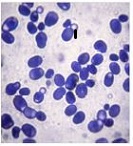
The research concerns the microbiological and morphological characteristics of deposits accumulated on membrane filters after the filtration of wine material, drinking water, and wastewater. The aim of the study was to evaluate signs of microbial contamination and biofouling associated with membrane filtration processes. Samples collected from membrane surfaces were examined using the crushed drop (“hanging drop”) microscopic method combined with optical microscopy at ×400 magnification.
The results of the study showed significant differences in the microbial composition of the filtered samples. The wine material was dominated by yeast cells, primarily oval-shaped Saccharomyces cerevisiae, which frequently formed aggregates and were associated with the fermentation process. No biological contamination was observed in the drinking water samples, indicating effective water purification and microbiological safety. Wastewater samples showed high microbial load, diverse bacterial morphology, activated sludge flocs, and biofilm-associated aggregates, indicating degree of membrane biofouling.
The study confirmed that the sediments accumulated on the membranes contain a variety of microbial organisms that may negatively affect the filtration efficiency and operational stability of the system. The results obtained emphasize the importance of microbiological monitoring in membrane filtration systems for optimizing the filtration process, reducing biofouling, and ensuring the long-term effective functioning of wine and water treatment technologies.
Скачивания
Manana Mamulashvili1, Giorgi Bibileishvili2, Zaza Javashvili3, Tinatin Butkhuzi4, Elene Kakabadze5 Determination of morphological and tinctorial characteristics of microorganisms in wine and water. Georgian Scientists Vol. 7 №2, 2025 https://doi.org/10.52340/gs.2025.07.02.59 pp. 647-651
1George Bibileishvili, 2Manana Mamulashvili, 3Elene Kakabadze, 4Liana Ebanoidze, 5Nona Butkhuzi, 6Ia Gogiberidze Microbiological analysis of wastewater, fruit juices, determination of microbial sizes, diagnostics and filtration of microorganisms. Georgian Scientists Vol. 7 №4 2025. Pp 440-443 https://doi.org/10.52340/gs.2025.07.04.
Bibileishvili G.V., Mamulashvili M.A., Javashvili Z.D., Kakabadze E.G. Microbiological study of natural fresh waters treated with ultrafiltration membranes. Georgian Engineering News, Vol. 93 ȹ2, 2021, pp. 113-114
G. Bibileishvili, N. Gogesashvili, M. Kezherashvili, L. Kuparadze, M. Mamulashvili, L. Ebanoidze Micro- and ultrafiltration treatment of water and fruit juices. Collection of abstracts of the international conference “Chemistry - Achievements and Prospects” dedicated to the 90th anniversary of the birth of Academician Givi Tsintsadze. GTU 2023
Fleet G. Yeasts in Wine Production Book. Chapter 1 - Yeast Ecology in Winemaking 2022
Mamulashvili M., Gogiberidze I. RESEARCH ON THE HYDROBIOCHEMICAL STATE OF LAKE LISI WATER. Slovak international scientifik journal №105 2026. pp. 4-7
Copyright (c) 2026 Georgian Scientists

Это произведение доступно по лицензии Creative Commons «Attribution-NonCommercial-NoDerivatives» («Атрибуция — Некоммерческое использование — Без производных произведений») 4.0 Всемирная.