
Seasonal Study of Lead Content in the Atmospheric Air of the Chorokhi River

Downloads




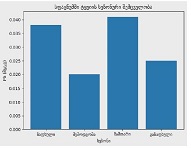
The aim of this study was to assess seasonal variations in lead (Pb) concentrations in the atmospheric air of the Chorokhi River basin and determine its potential environmental impact. The Chorokhi River basin is an ecologically important transboundary system with intensive transport, industrial, and agricultural activities, increasing the risk of heavy metal pollution. The study utilized an active biomonitoring based on sphagnum moss, which relies on the moss's ability to accumulate heavy metals from atmospheric air. Bags containing sphagnum moss were placed at six study sites. Lead concentrations were determined using atomic absorption spectrometry (AAS). The results showed that the maximum lead concentration was recorded in winter—0.041 mg/kg—and the minimum—0.020 mg/kg—in autumn. The pollution index showed the greatest significance during the winter period. The study's results confirmed that lead levels in atmospheric air vary seasonally and are significantly influenced by both anthropogenic and climatic factors. Sphagnum biomonitoring is an effective tool for assessing atmospheric air quality.
Downloads
1. „მდინარე ჭოროხი-აჭარისწყლის აუზის მართვის გეგმა“. REC Caucasus.
2. Assessment of Heavy Metal Pollution of Çoruh River (Turkey).
3. Centers for Disease Control and Prevention. (2024a). Blood lead reference value updates. U.S. Department of Health and Human Services.
4. l and Prevention (CDC). Blood Lead Reference Value Updates. Atlanta, 2024.
5. Institute for Health Metrics and Evaluation (IHME). Lead Exposure – Level 3 Risk. Seattle, 2024.
6. World Health Organization (WHO). Guidelines for Clinical Management of Exposure to Lead. Geneva, 2021.
7. World Health Organization (WHO). Exposure to Lead: A Major Public Health Concern. 2nd ed., Geneva, 2019.
8. Centers for Disease Control and Prevention (CDC). Childhood Lead Poisoning Prevention. Atlanta, 2024.
9. Shoreline Changes (1984–2019) in the Çoruh Delta (Georgia/Batumi), International Journal of Geography and Geography Education (IGGE).
10. Makholm MM, Mladenoff DJ. Efficacy of a biomonitoring (moss bag) technique for determining element deposition trends on a mid-range (375 km) scale. Environ Monit Assess. 2005 May;104(1-3):1-18. doi: 10.1007/s10661-005-6398-3. PMID: 15931974.
11. Atomic absorption spectrometry — A multi element technique [Electronic resource]. — Access mode: https://www.sciencedirect.com/science/article/pii/S0165993617304235
12. Roostaei V, Gharibzadeh F, Shamsipour M, Faridi S, Hassanvand MS. Vertical distribution of ambient air pollutants (PM2.5, PM10, NOX, and NO2); A systematic review. Heliyon. 2024 Oct 24;10(21):e39726. doi: 10.1016/j.heliyon.2024.e39726. PMID: 39553653; PMCID: PMC11564963.
Copyright (c) 2026 Georgian Scientists

This work is licensed under a Creative Commons Attribution-NonCommercial-NoDerivatives 4.0 International License.