
Combined Application of Stevia and Amylase Enzyme in Wheat Flour Buns

Downloads




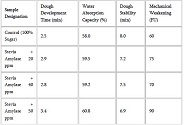
In the modern food industry, sugar reduction strategies in bakery products are highly relevant due to growing consumer demand for low-glycemic alternatives. However, the multifaceted technological functions of sucrose pose significant challenges when substituting it in yeast-leavened formulations. This study evaluates the combined effect of Stevia rebaudiana, as a natural high-intensity sweetener, and alpha-amylase, acting as an enzymatic modifier, in wheat flour bun production. The feasibility of complete sucrose substitution using stevia alongside varying doses of alpha-amylase was investigated. The rheological properties of the dough, fermentation kinetics, physicochemical characteristics, and the sensory profile of the final baked goods were systematically evaluated. The results demonstrated that the incorporation of alpha-amylase significantly mitigates the adverse quality effects induced by stevia, markedly improving loaf volume, crumb porosity, and textural attributes. The optimal formulation was achieved by replacing 100% of sucrose with stevia extract supplemented with 40 ppm of alpha-amylase, which successfully restored the dough stability and gas production capacity to levels comparable to the control.
Downloads
1. Nutsubidze, N., & Kiziria, L. (2018). Enzymatic modification of wheat flour carbohydrates in breadmaking technology. Proceedings of the Agricultural University of Georgia, 42(3), 112–118. (in Georgian).
2. Chikovani, M., & Beridze, T. (2021). The impact of natural sweeteners on the rheological properties of dough and quality of functional bakery products. Food Technology and Industry, 15(2), 45–51. (in Georgian).
3. Goliashvili, Z. (2019). Application of high-intensity sweeteners of plant origin in confectionery and bakery production. Bulletin of the Academy of Agricultural Sciences of Georgia, 5(4), 88–94. (in Georgian).
4. Belitz, H. D., Grosch, W., & Schieberle, P. (2009). Food Chemistry (4th ed.). Springer-Verlag.
5. Goesaert, H., Slade, L., Levine, H., & Delcour, J. A. (2009). Amylases and bread stalling – an integrated view. Journal of Cereal Science, 50(3), 345–352. https://doi.org/10.1016/j.jcs.2009.04.010
6. Lemus-Mondaca, R., Vega-Gálvez, A., Zura-Bravo, L., & Ah-Hen, K. (2012). Stevia rebaudiana Bertoni, source of a high-potency natural sweetener: A comprehensive review on the biochemical, nutritional and functional aspects. Food Chemistry, 132(3), 1121–1132. https://doi.org/10.1016/j.foodchem.2011.11.140
7. Manisha, G., Soumya, C., & Indrani, D. (2012). Studies on rheological characteristics of wheat flour dough using stevioside and its effect on cake quality. Journal of Texture Studies, 43(3), 224–232. https://doi.org/10.1111/j.1745-4603.2011.00332.x
8. Rosell, C. M., Rojas, J. A., & de Barber, C. B. (2001). Influence of hydrocolloids on dough rheology and bread quality. Food Hydrocolloids, 15(1), 75–81. https://doi.org/10.1016/S0268-005X(00)00054-0
Copyright (c) 2026 Georgian Scientists

This work is licensed under a Creative Commons Attribution-NonCommercial-NoDerivatives 4.0 International License.