INTEGRATED ASSESSMENT OF AQUATIC ECOSYSTEMS IN THE LOWER PRUT BIOSPHERE RESERVE
Keywords:
Water quality, Physicochemical parameters, Biodiversity, Black Sea basin, Prut River, Beleu and Manta Lakes, Lower Prut Biosphere Reserve, Care Sea projectAbstract
The conservation of intact natural ecosystems and genetic resources at both global and regional levels is a fundamental objective of nature conservation in general, and biodiversity protection in particular. This effort aims to maintain equilibrium among natural environmental components, as well as between these components and human society. Furthermore, it contributes significantly to the sustainable management of natural resources in the southwestern region of the Republic of Moldova.
Characterized by high biodiversity and exceptional economic, scientific, and recreational value, this area encompasses highly productive ecosystems whose degradation would lead to irreversible losses.
Consequently, a comprehensive assessment and analysis of the ecological status of aquatic resources within the Lower Prut Biosphere Reserve are essential to ensure their sustainable use, conserve biodiversity, and protect the region's natural habitats.
Accordingly, this study provides a comprehensive scientific investigation based on an integrated assessment of anthropogenic impacts, including plastic pollution and solid waste, on the aquatic ecosystems within the Reserve. Its primary objective is to evaluate water quality and address the identified environmental issues.
The investigation involved measuring physicochemical parameters and analysing heavy-metal concentrations in aquatic sediments collected from the Prut and Danube rivers and Lakes Manta and Beleu, which belong to the Black Sea basin. The study also assessed the trophic status and degree of eutrophication of the lakes and examined the presence and potential impact of microplastics in the study area.
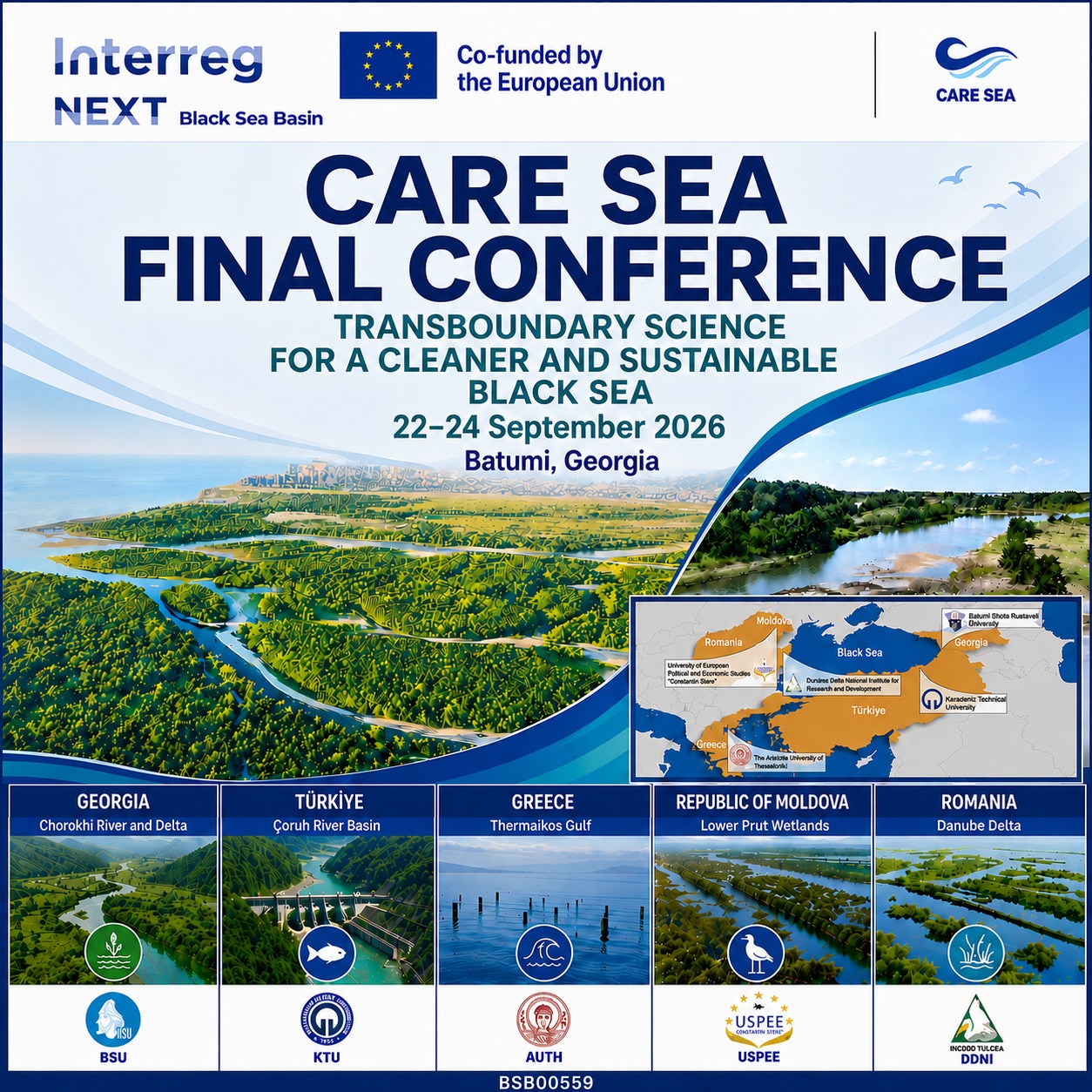
This study was supported financially by the European Union through the project “Cooperation and Awareness for Pollution-free and Environmentally Sustainable Black Sea” (CARE SEA; BSB00559), implemented under the Interreg NEXT Black Sea Basin Programme by a consortium of five countries, including the Republic of Moldova.
Downloads
References
1. Carlson, R.E., (1984). The trophic state concept: a lake management perspective. Lake Reservoir Manag. 1, 427–430. https://doi.org/10.1080/07438148409354550
2. Catalogul standardelor naționale ale Republicii Moldova (Vol. 1). (2014). Institutul Național de Standardizare. 920 p.
3. Guvernul Republicii Moldova. (2013). Hotărârea nr. 890 din 12 noiembrie 2013 pentru aprobarea Regulamentului cu privire la cerințele de calitate a mediului pentru apele de suprafață. [Government of the Republic of Moldova. (2013). Government Decision No. 890 of November 12, 2013, approving the Regulation on Environmental Quality Requirements for Surface Waters.] MO al Republicii Moldova din 22.11.2013, Nr. (262–267), art. 1006.
4. Guvernul Republicii Moldova. (2021). Hotărârea nr. 122 din 12 august 2021 pentru aprobarea Regulamentului de funcționare a Rezervației Biosferei „Prutul de Jos”. MO al Republicii Moldova, (197–201), art. 268.
5. Lee, C. C., & Lin, S. D. (2007). Handbook of environmental engineering calculations (2nd ed.). McGraw-Hill, 1792 p.
6. Lu, F. L. (2008). Trophic classification for lakes. In S. E. Jørgensen & B. Fath (Eds.), Encyclopedia of ecology. Elsevier. 3594 - 3601 p.
7. Ministerul Mediului și Gospodăririi Apelor. (2006). Ordinul nr. 161 din 16 februarie 2006 pentru aprobarea Normativului privind clasificarea calității apelor de suprafață în vederea stabilirii stării ecologice a corpurilor de apă. [Order No. 161 of February 16, 2006, approving the regulations on the classification of surface water quality for determining the ecological status of water bodies]
8. Romanian Institute for Standardization. (1988). STAS 4706/88: Categories and quality conditions of surface waters.
9. Sirețeanu, D., et al. (1997). Regulament igienic. Protecția bazinelor de apă contra poluării. Tipografia AȘM, 21 p.
10. Tărîță, A., Cozari, T., Sandu, M., Lozan, R., Liogchii, N., Brega, V., Moșanu, E., Ajder, V., Bejan, I., Brașoveanu, V., Overcenco, A., Hachi, M., Popov, L., Zlotea, A., & Comarnițchi, A. (2018). Planul de management al Zonei Umede de Importanță Internațională RAMSAR „Lacurile Prutului de Jos” (T. Cozari, Ed.). Primex-Com, 88 p.
11. Tudor, I. M. (2015). Ghid metodologic de monitorizare a factorilor hidromorfologici, chimici și biologici pentru apele de suprafață din Rezervația Biosferei Delta Dunării. Centrul de Informare Tehnologică Delta Dunării, 143 p.
12. WETZEL, R. [Ed.] 1983. Periphyton of freshwater ecosystems. Develop. Hydrobiol. 17. Dr. W. Junk BY Publ., The Hague. 346 p.
13. Унифицированные методы исследования качества вод. Часть 1. Методы анализа вод. (1983). М.: Наука, 108 c.