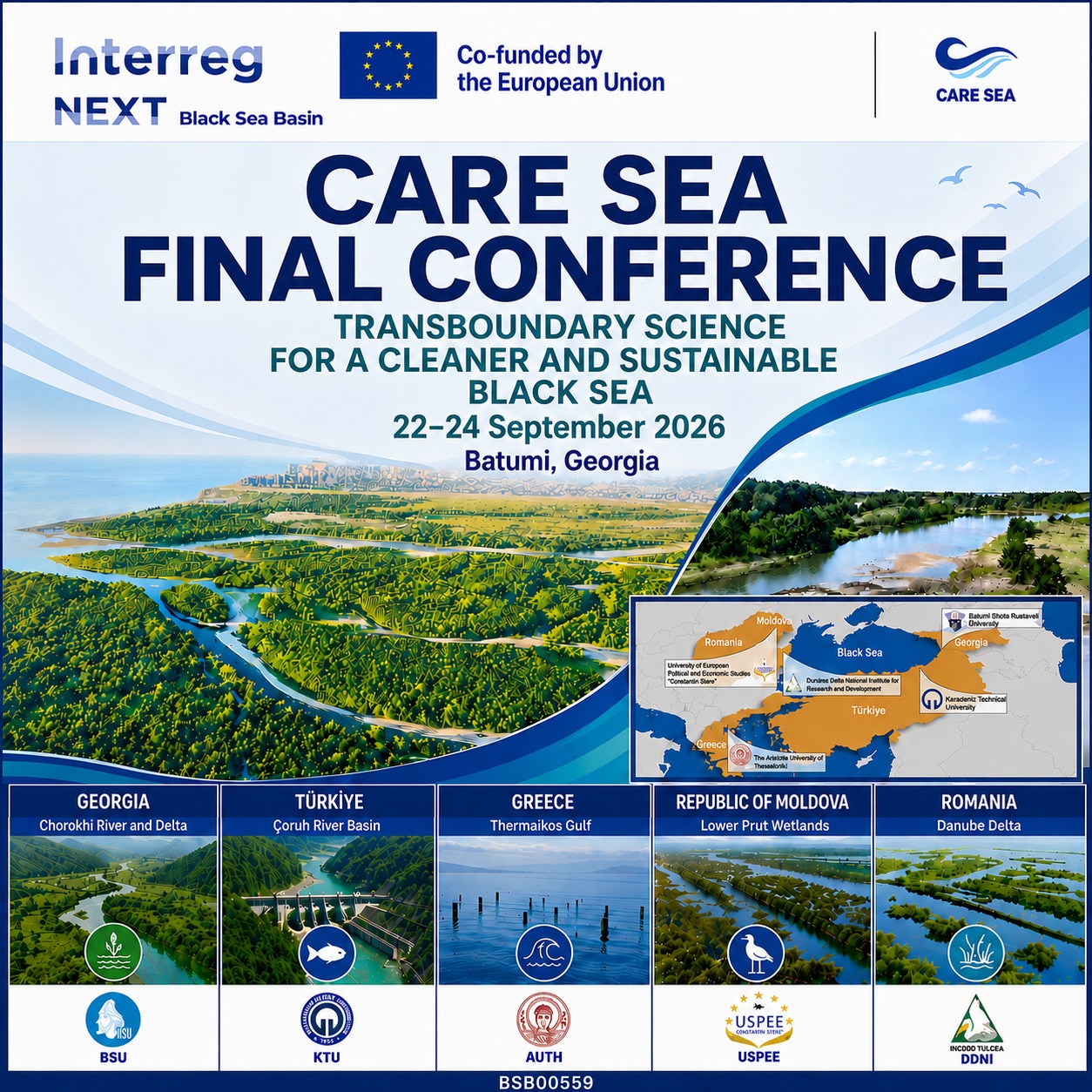
Reed and Cattail Cultivation for Wetland Restoration in the Chorokhi River Delta
Keywords:
Chorokhi River Delta, wetland-compatible cultivation, wetland restoration, Phragmites australis, Typha, hydrological monitoring, ecosystem servicesAbstract
The Chorokhi River Delta provides a setting for examining whether productive wetland use can support ecological restoration without increasing pressure on valuable habitats. This conceptual article develops a feasibility framework for a small reed and cattail demonstration on degraded wet land. Its purpose is to translate the CARE SEA restoration concept into an assessable research design rather than to report the outcomes of an established plantation. The framework combines a targeted reading of paludiculture literature with a qualitative analysis of the existing Chorokhi conference presentation and its proposed restoration measures. No original measurements of soil properties, biomass yield, nutrient removal, greenhouse gas fluxes or household income are analysed. Accordingly, the output is a set of proposed assessment criteria, management zones and monitoring procedures. The local reporting context identifies the Chorokhi study area as lacking peat soils. The proposed activity is therefore described as wetland-compatible reed and cattail cultivation. Paludiculture is discussed only as a peatland-specific comparison, and peat-conservation benefits are not attributed to the Chorokhi demonstration. Site screening addresses soil type, water availability, ecological sensitivity, land tenure, pollution and practical access. The proposed demonstration separates hydrological recovery and natural regeneration from controlled cultivation and an unharvested ecological buffer. Hydrological interventions precede planting and require assessment of effects on neighbouring land. Species selection depends on confirmed local occurrence and ecological compatibility; rare or sensitive populations are excluded from biomass production. Monitoring compares baseline and subsequent conditions, preferably using replicated treatment and reference units. Water levels, native vegetation, invasive plants, habitat use, biomass quality and management costs are assessed together. Nutrient retention, carbon balance and profitability remain hypotheses requiring appropriate measurements, rather than assumed benefits. Decisions to harvest or expand the demonstration depend on ecological performance and a separate assessment of market feasibility. The framework offers a practical basis for collaboration among researchers, authorities, land users and communities. Its principal conclusion is that a carefully screened demonstration could test restoration-compatible land use in the delta, while the available material does not establish the suitability of any particular site or justify large-scale implementation.
Downloads
References
[1] Joosten, H., Gaudig, G., Tanneberger, F., Wichmann, S., & Wichtmann, W. (2016). Paludiculture: sustainable productive use of wet and rewetted peatlands. In A. Bonn, T. Allott, M. Evans, H. Joosten, & R. Stoneman (Eds.), Peatland Restoration and Ecosystem Services: Science, Policy and Practice (pp. 339–357). Cambridge University Press. https://doi.org/10.1017/CBO9781139177788.018
[2] Matchutadze, I. (2026). Cultivation of Reed and Cattail for Ecosystem Restoration in the Chorokhi River Delta: Feasibility Framework and Pilot Implementation Plan [Conference presentation]. CARE SEA Final Conference, Hilton Batumi, Georgia, 22–24 September 2026. Source presentation file: Chorokhi_Reed_Cattail_Paludiculture_with_Poster_CARE_SEA_EN.pptx.
[3] Schröder, C., Dahms, T., Paulitz, J., Wichtmann, W., & Wichmann, S. (2015). Towards large-scale paludiculture: addressing the challenges of biomass harvesting in wet and rewetted peatlands. Mires and Peat, 16, Article 13, 1–18. https://www.mires-and-peat.net/article/128552.pdf
[4] Evans, C. D., et al. (2021). Overriding water table control on managed peatland greenhouse gas emissions. Nature, 593, 548–552. https://doi.org/10.1038/s41586-021-03523-1
[5] Chorokhi study report documenting the absence of peat soils. Exact report title, author(s), year and relevant page to be supplied before submission.